About Bracco Italiano


The Bracco Italiano is one of the oldest pointing breeds in Europe — a true Italian hunting dog built for stamina, scenting power, and an unmistakably close bond with its handler. This page brings together the official breed standards and what four years of living, training, and hunting with our own Bracchi have taught us about the breed.

A Short History

The Bracco Italiano descends from ancient Italian pointing dogs depicted in art and texts dating back several centuries, with two regional lines — the heavier, white-and-chestnut Piedmontese type and the more compact, white-and-orange Lombard type — eventually merging into the single breed recognised today. The breed nearly disappeared after the Second World War, surviving thanks to a small number of dedicated Italian breeders, and has since spread internationally as both a serious hunting companion and a family dog.

A Glimpse Into the Past

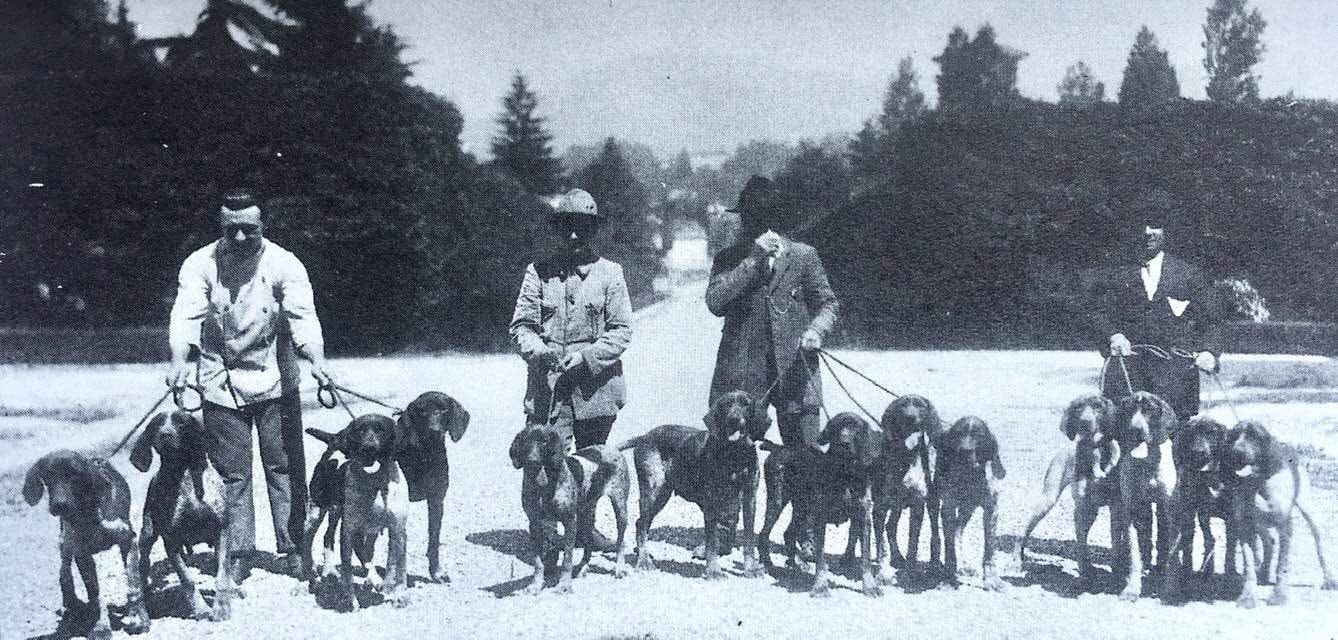
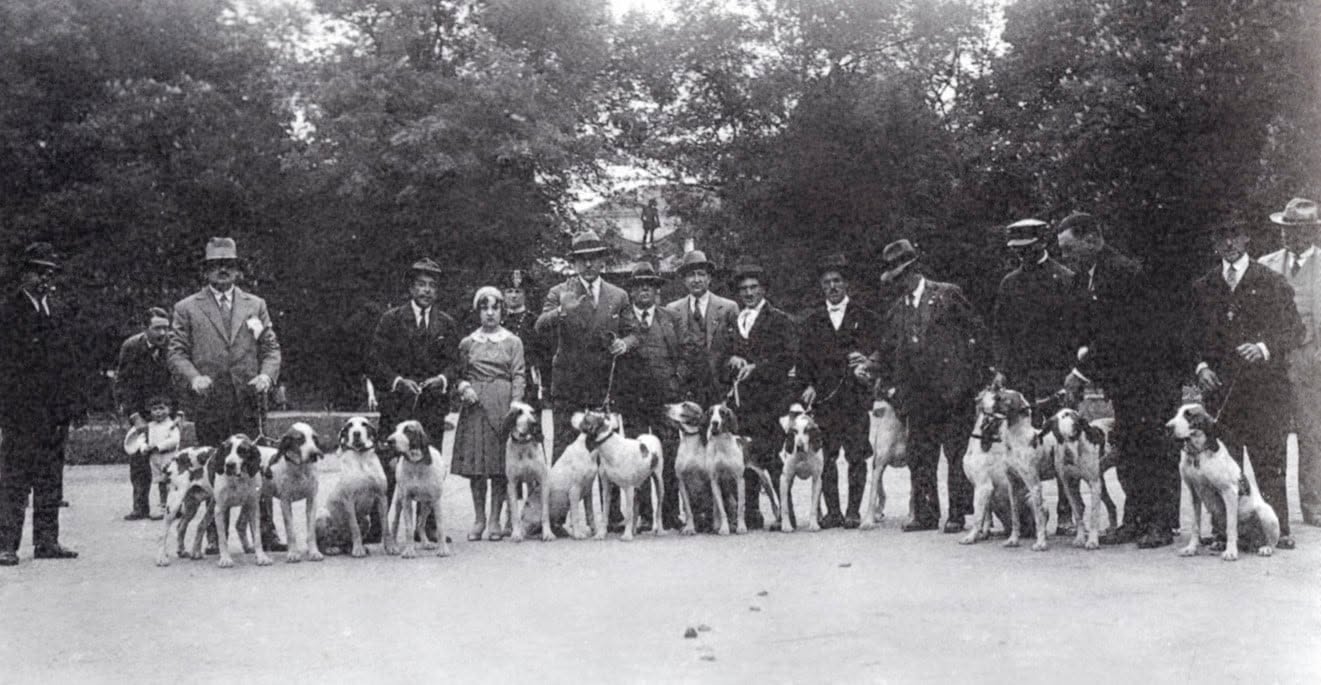
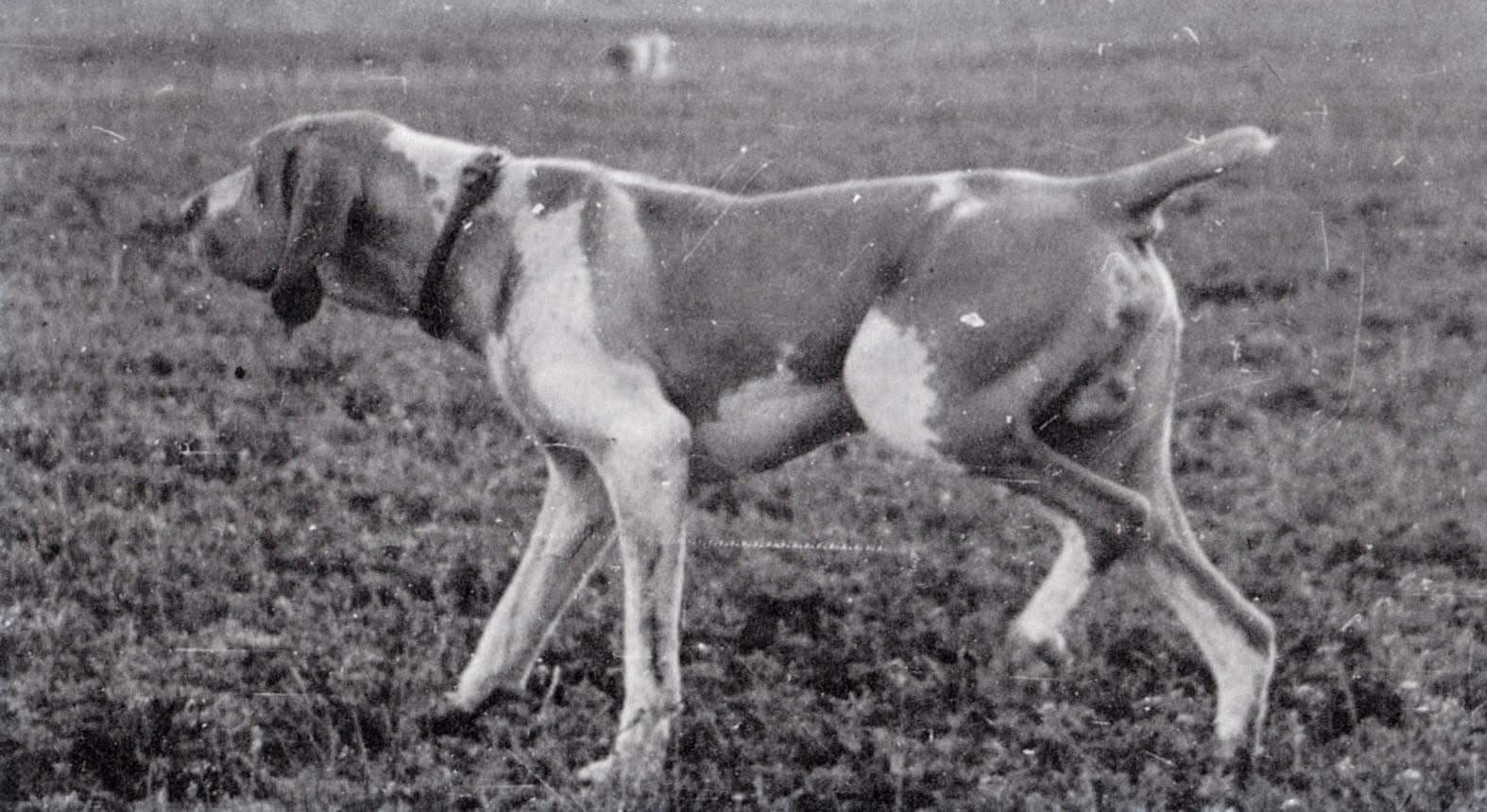
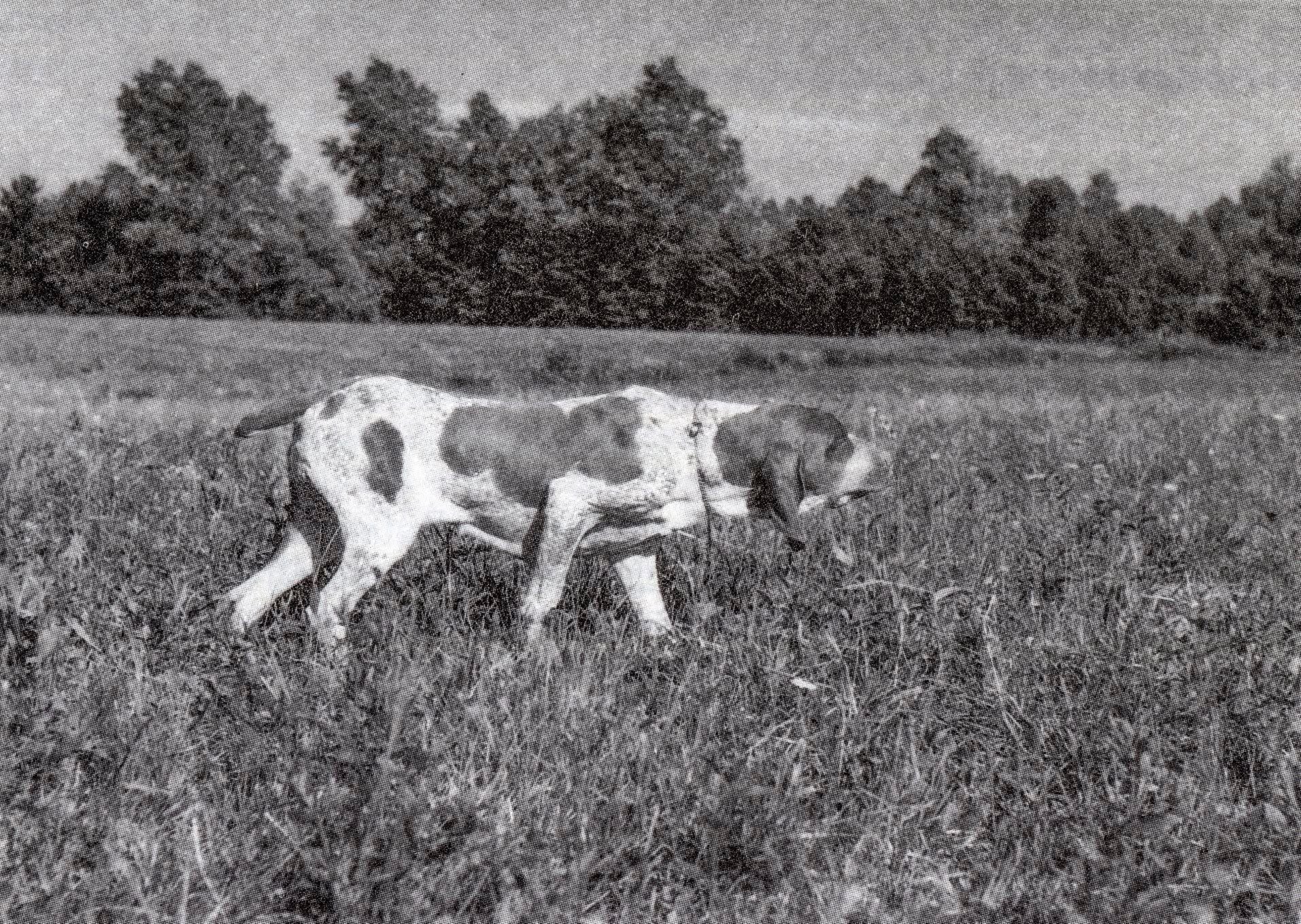
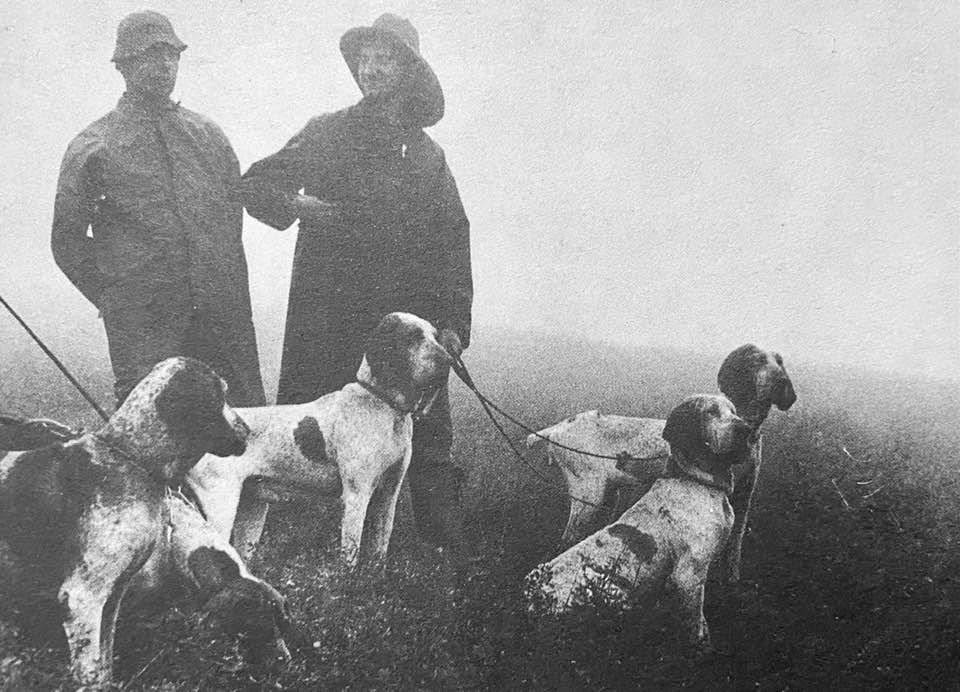
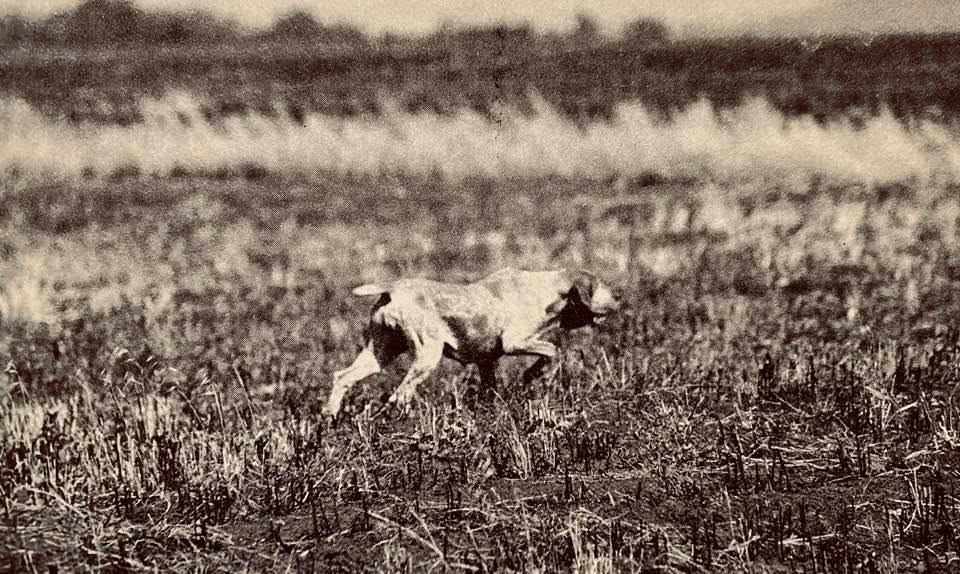
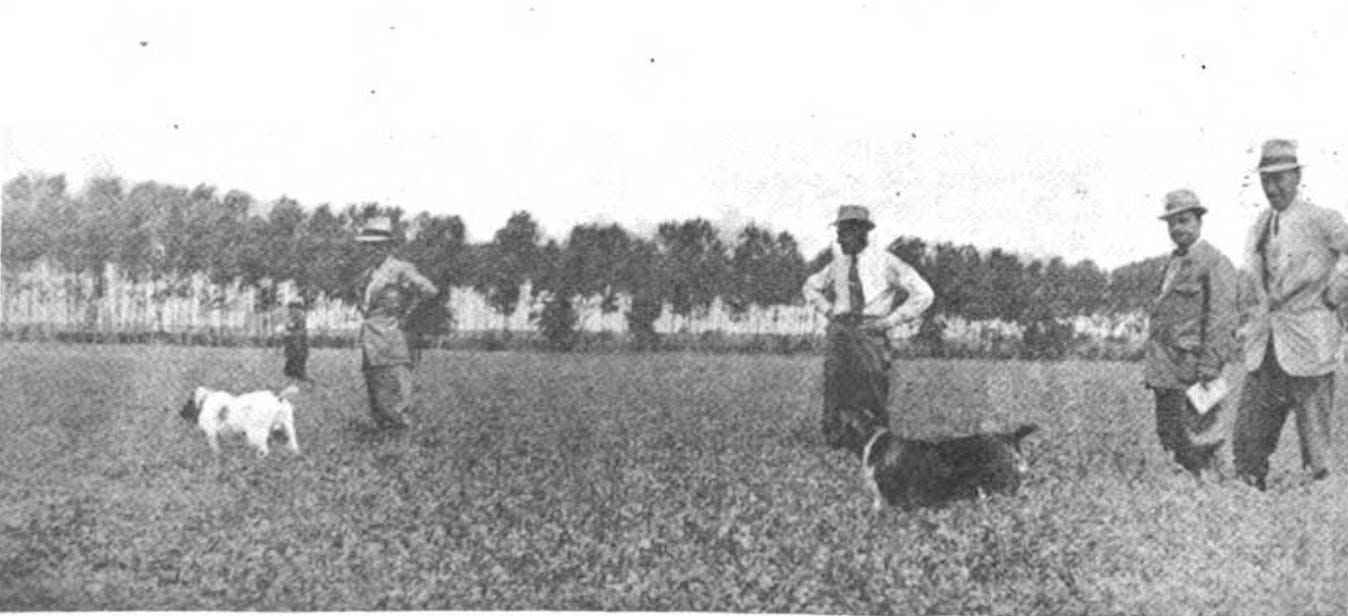
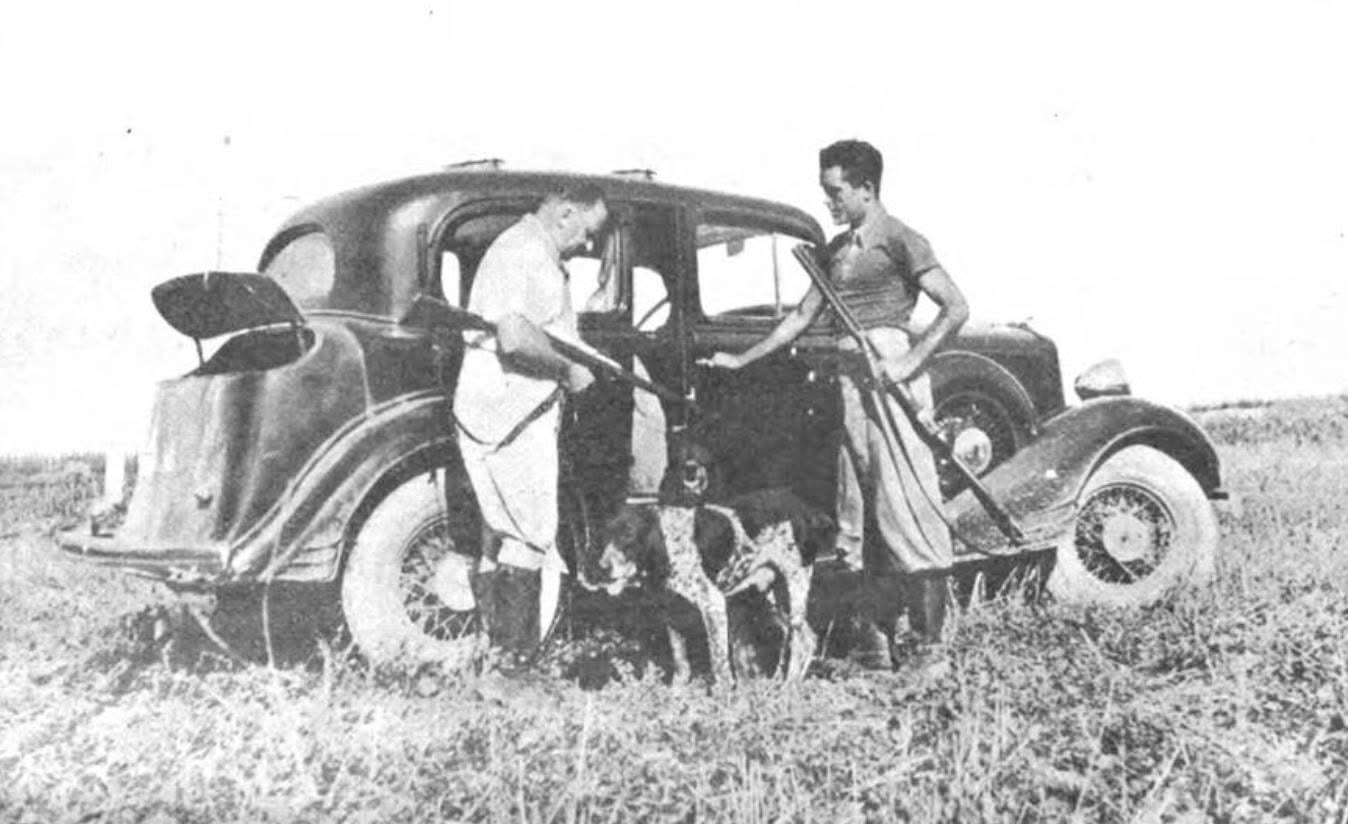
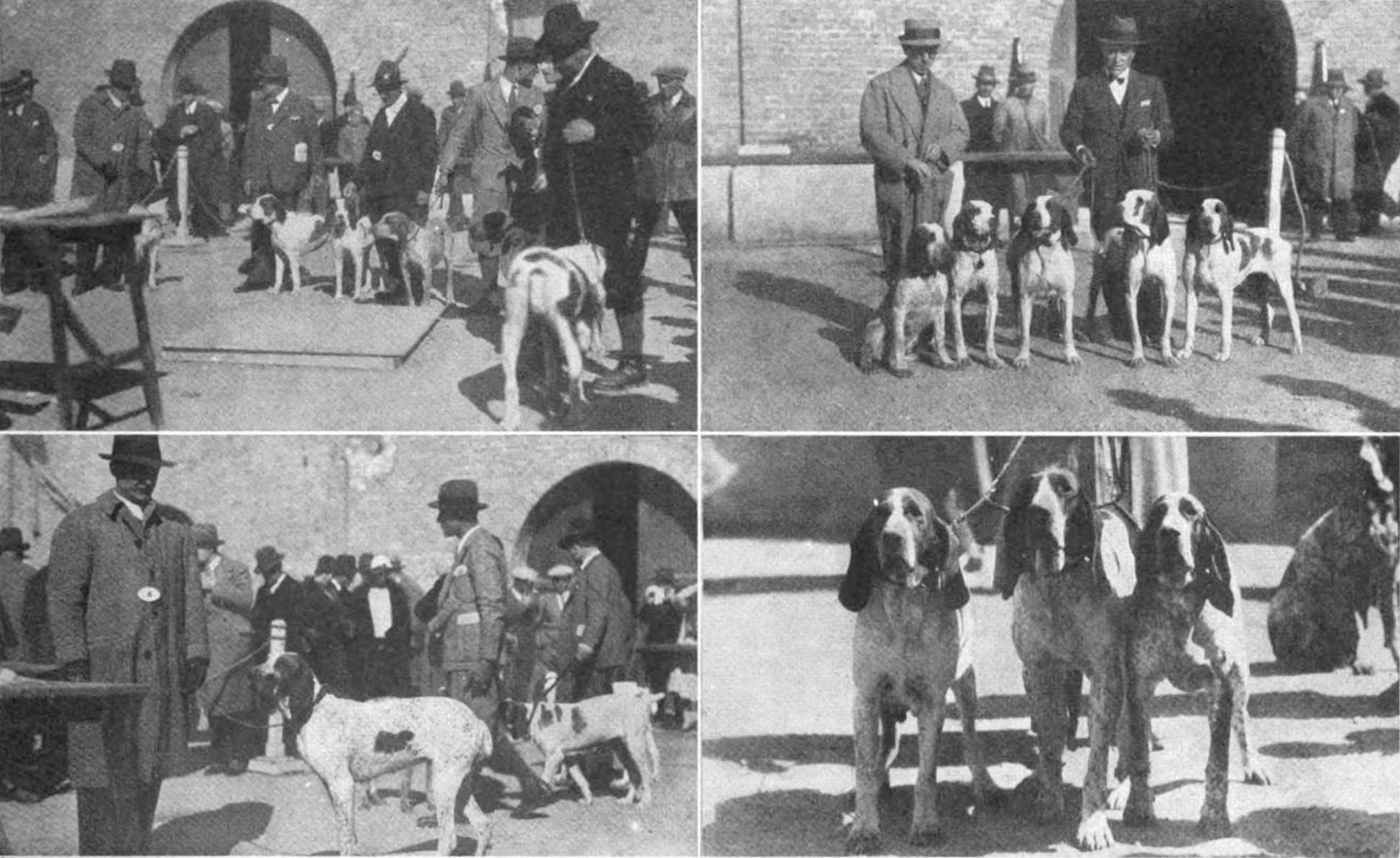
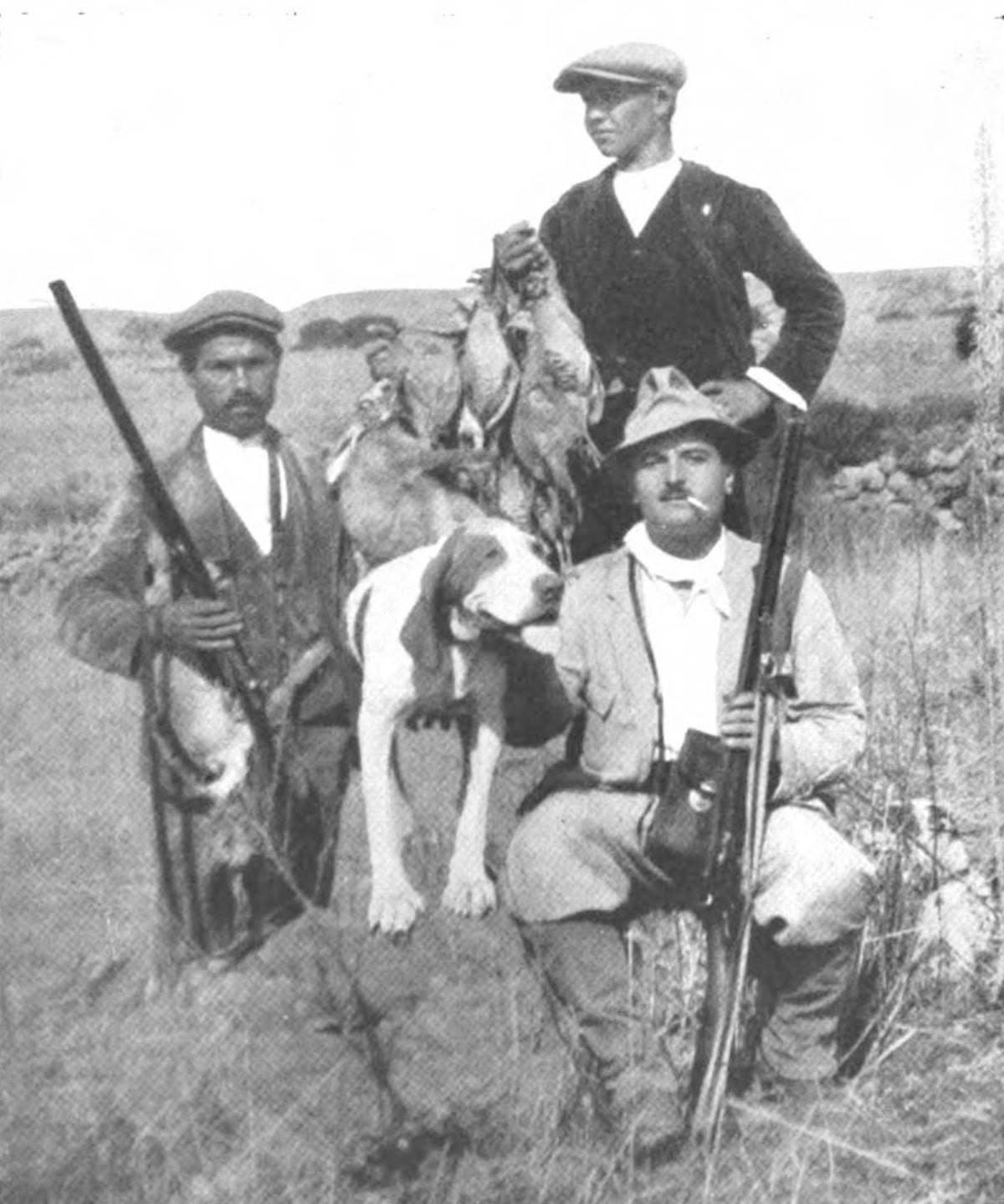
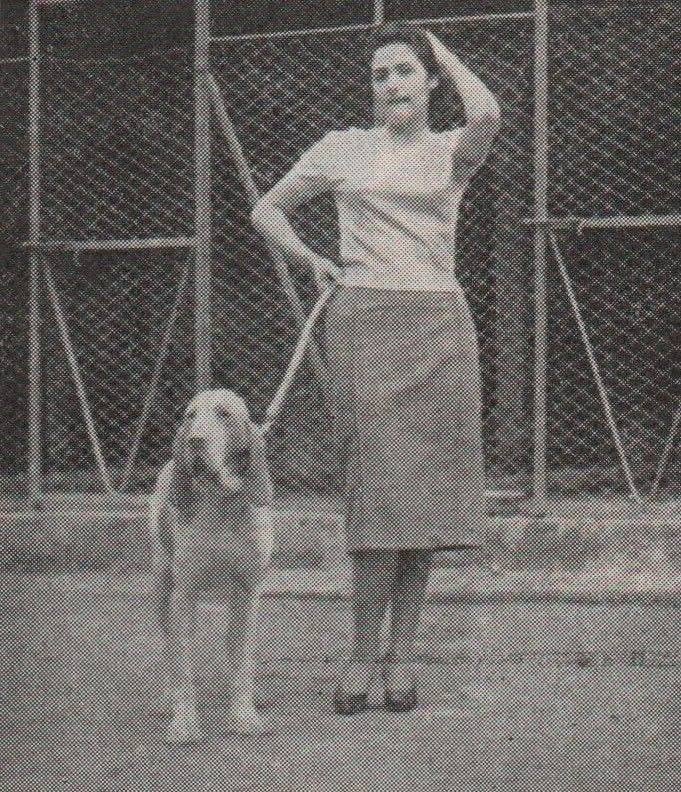
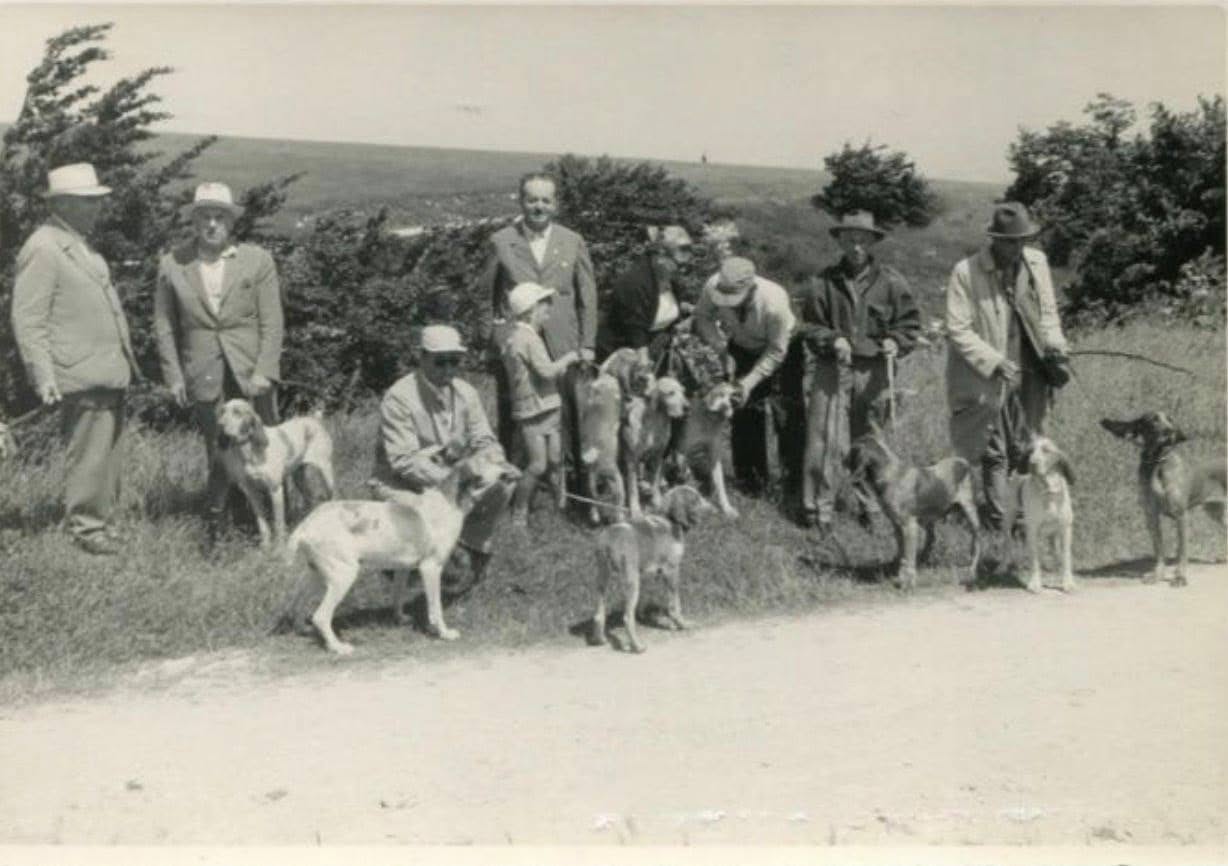
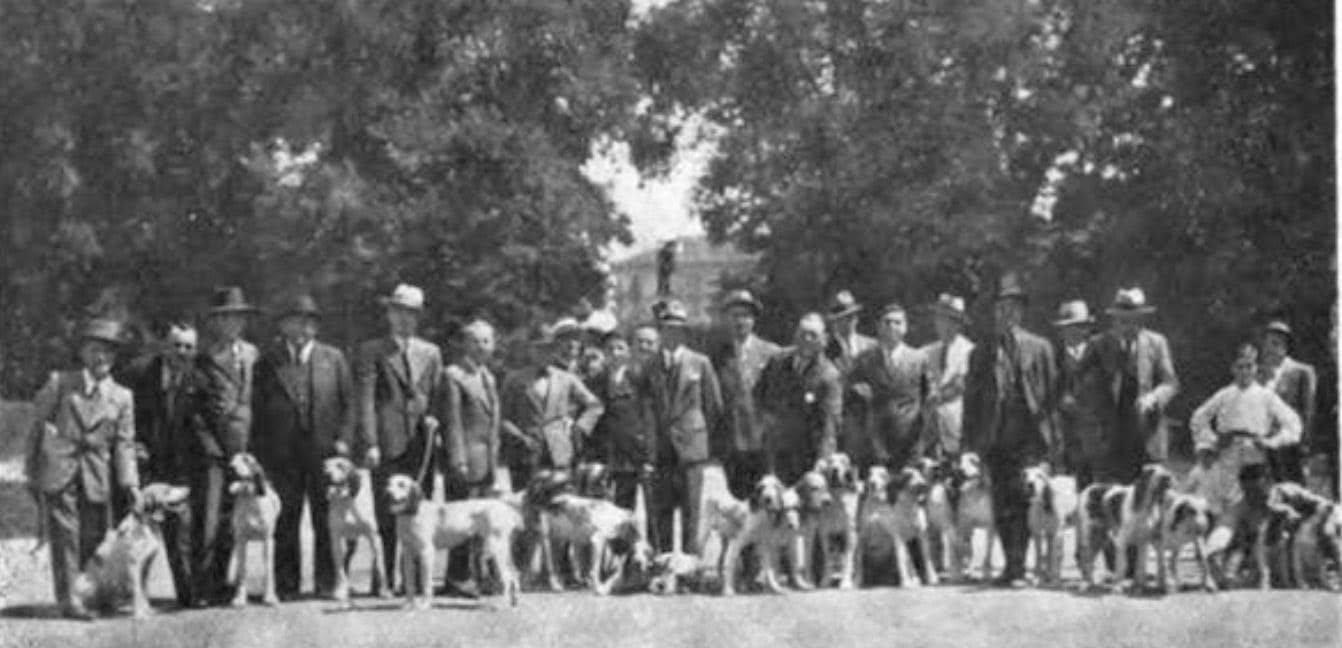
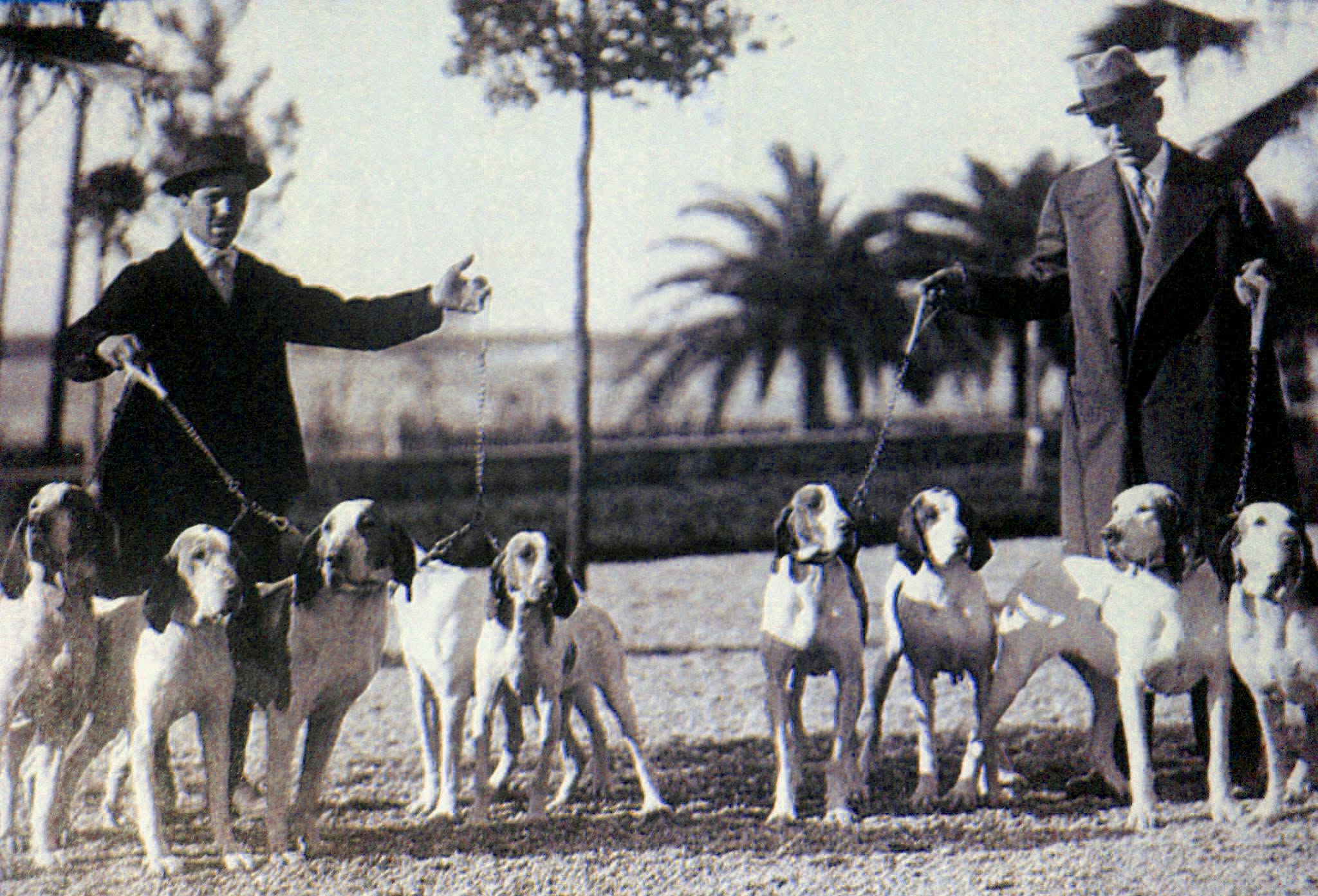
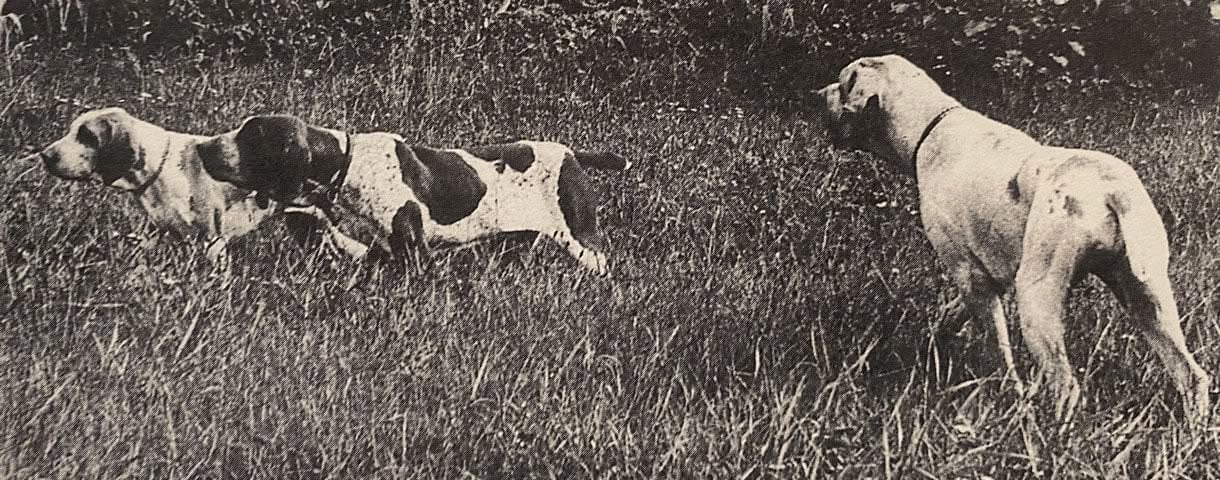
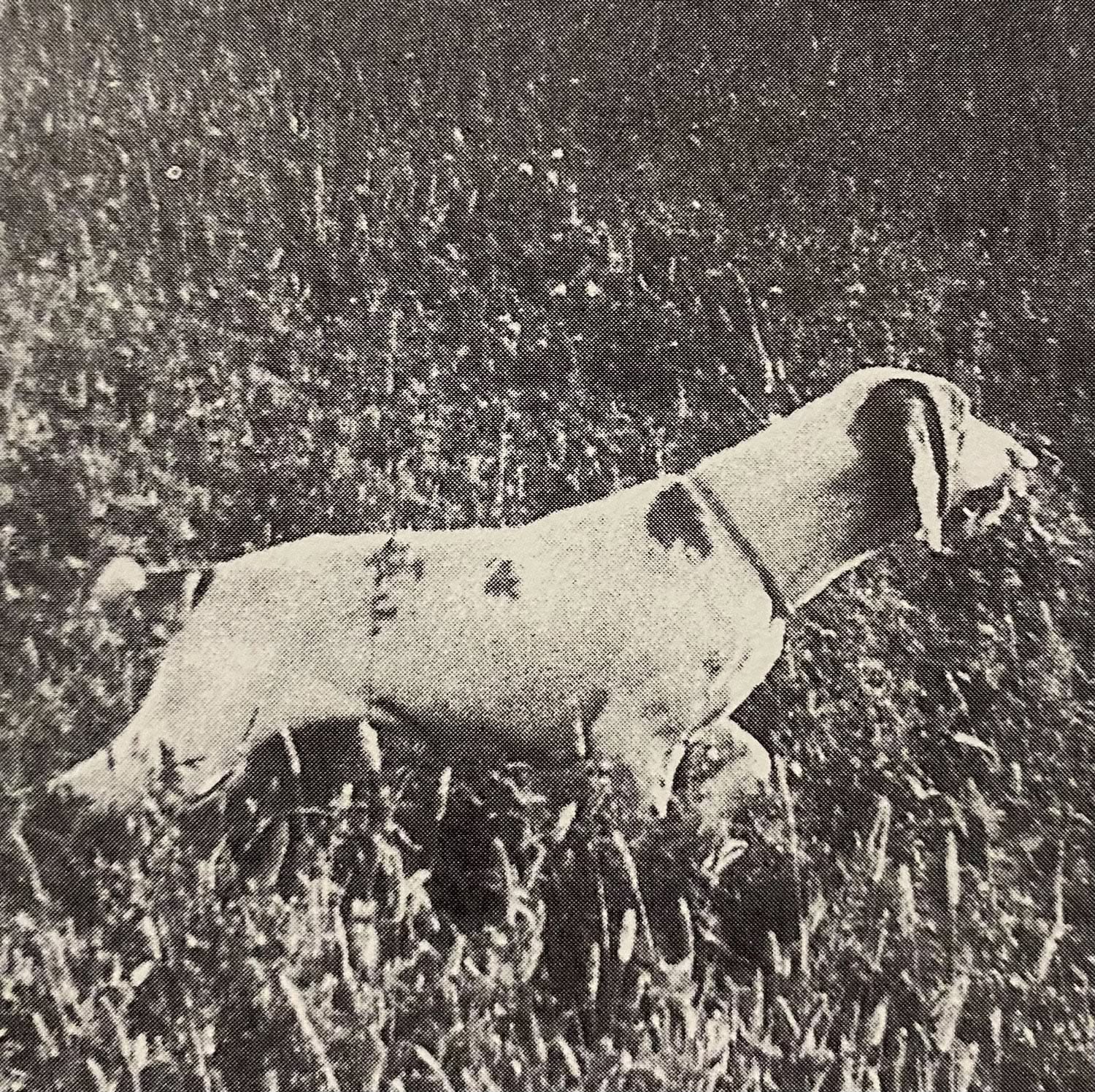
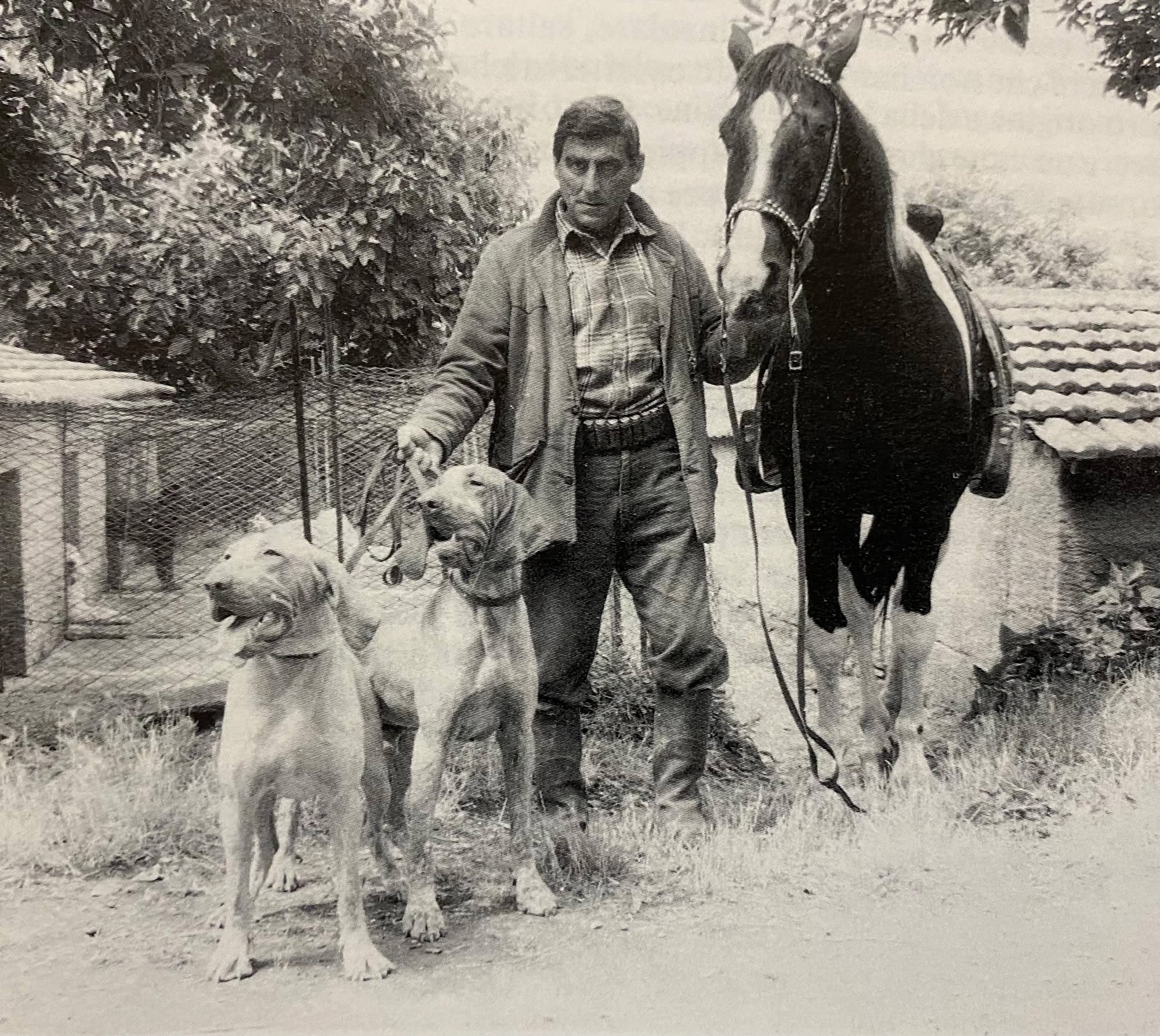
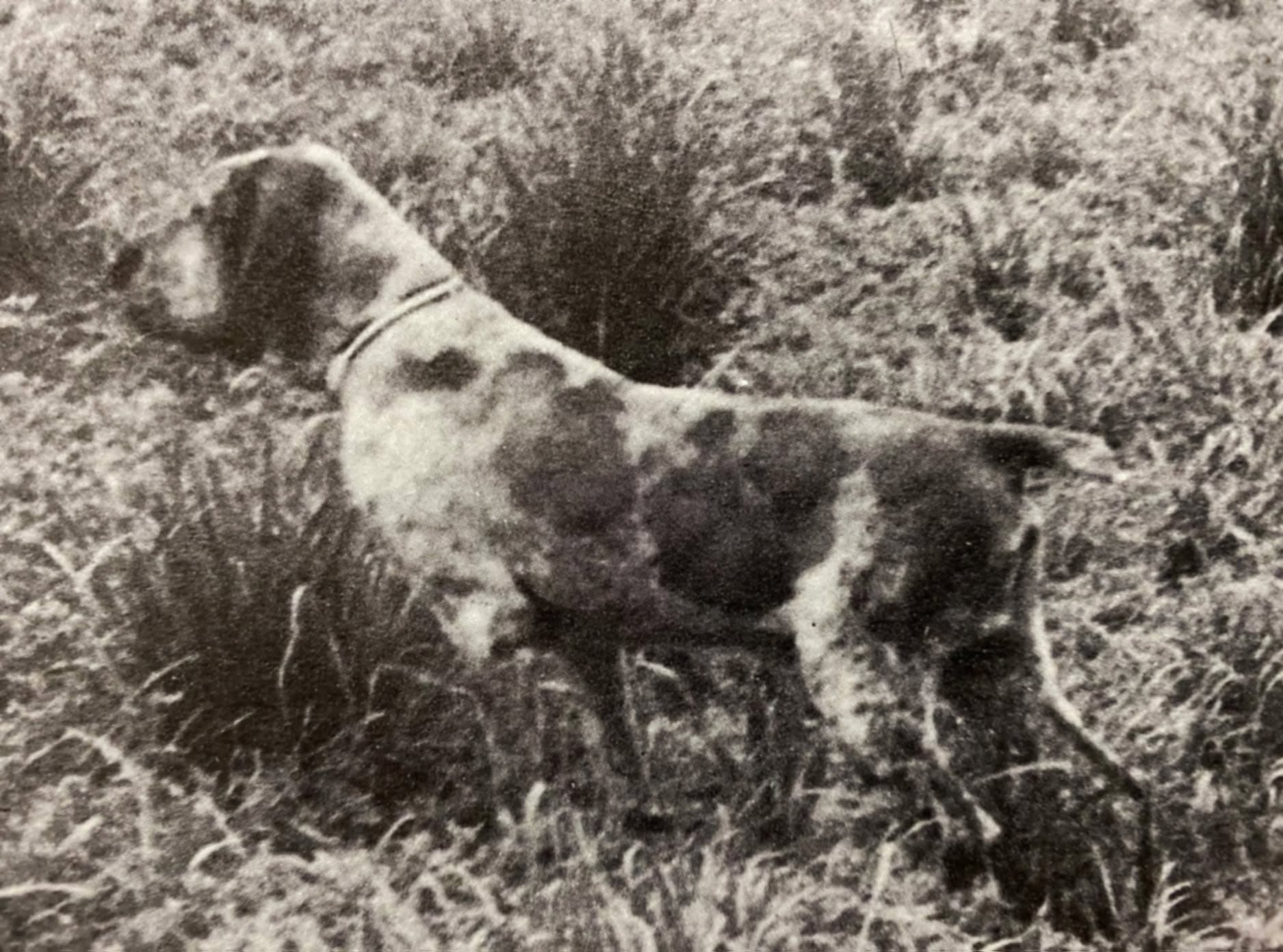
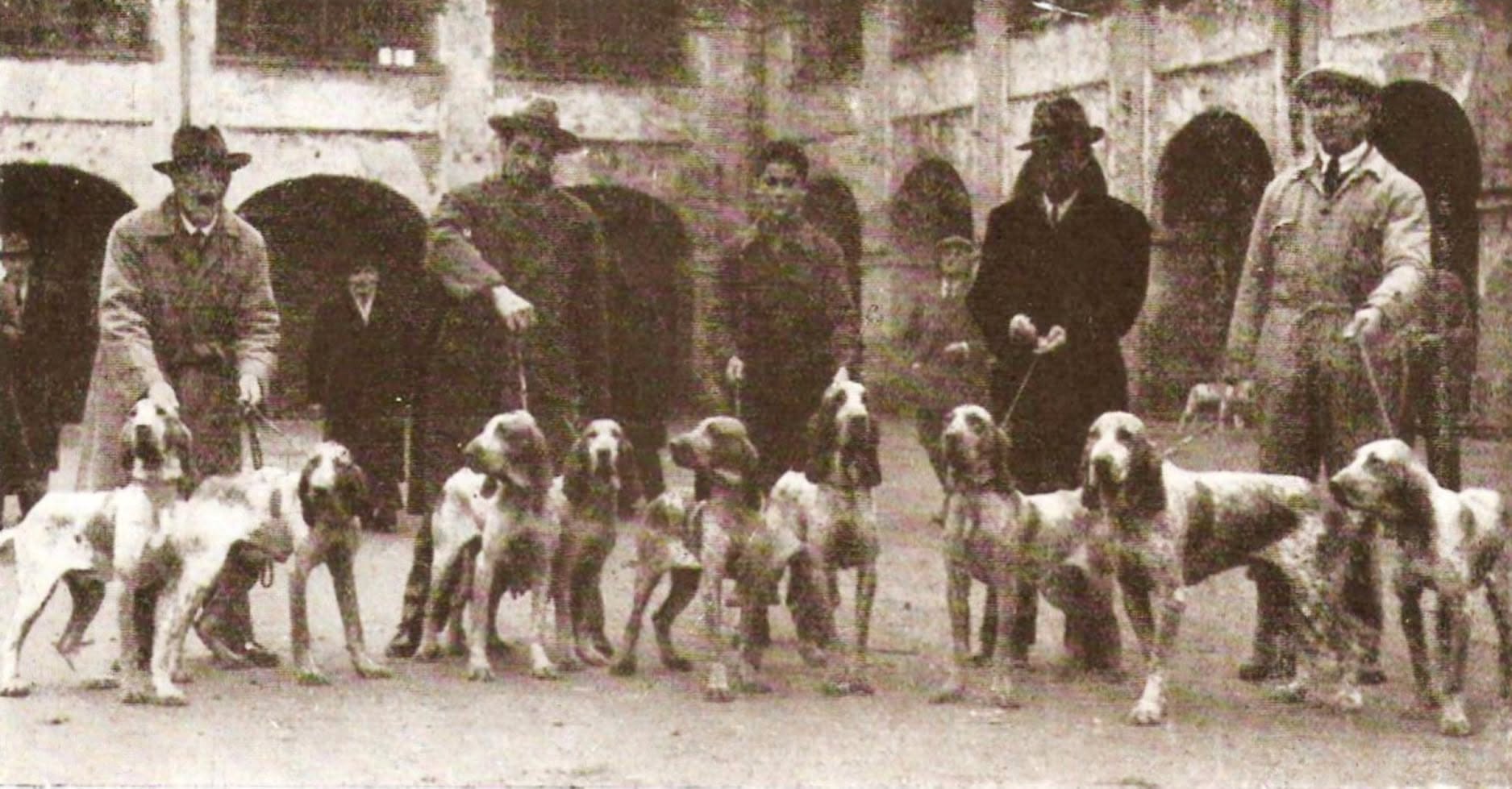
The Bracco Italiano’s roots run deep — Italian pointing dogs of this type appear in art and sporting literature long before the breed had a written standard. A few historical glimpses, all public-domain:
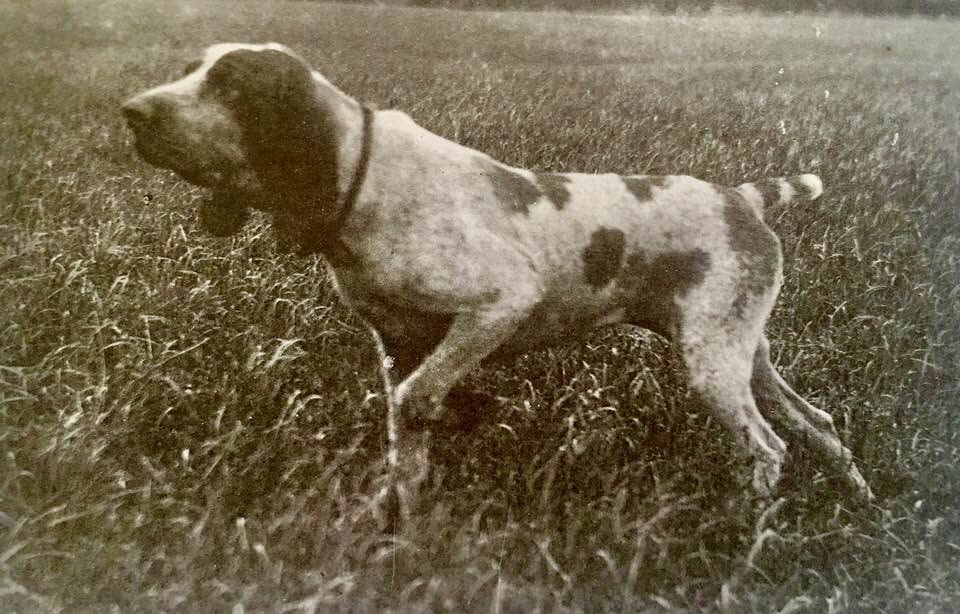
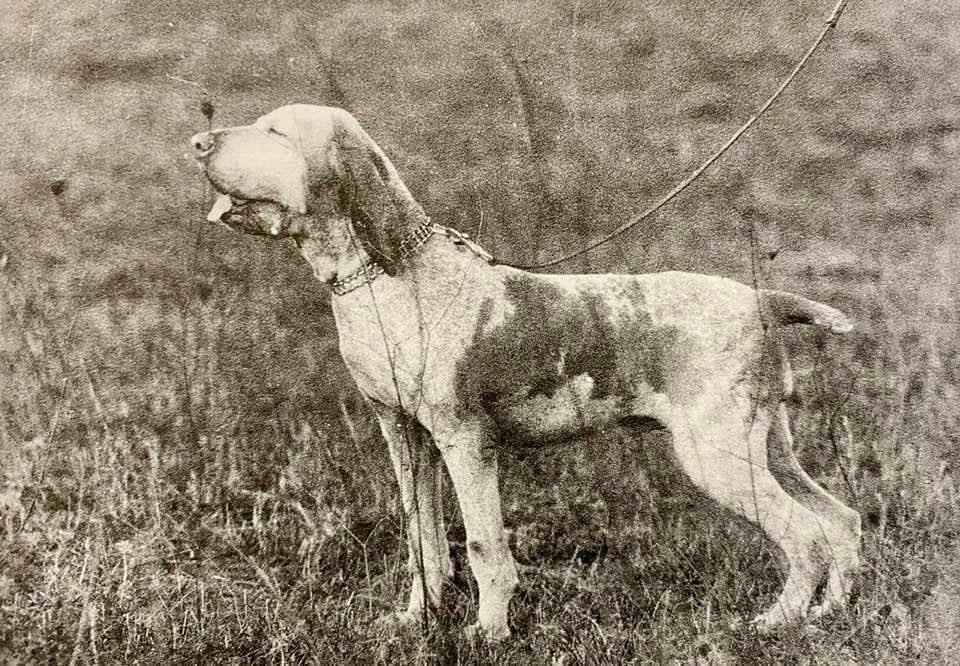
Historical photographs courtesy of the Bracco Italiano Database (Facebook). Click any thumbnail below to view it full-size.

Historical Bracco Italiano photograph, Bracco Italiano Database archiveHistorical Bracco Italiano photograph, Bracco Italiano Database archiveHistorical Bracco Italiano photograph, Bracco Italiano Database archiveHistorical Bracco Italiano photograph, Bracco Italiano Database archiveHistorical Bracco Italiano photograph, Bracco Italiano Database archiveHistorical Bracco Italiano photograph, Bracco Italiano Database archiveHistorical Bracco Italiano photograph, Bracco Italiano Database archiveHistorical Bracco Italiano photograph, Bracco Italiano Database archiveHistorical Bracco Italiano photograph, Bracco Italiano Database archiveHistorical Bracco Italiano photograph, Bracco Italiano Database archiveHistorical Bracco Italiano photograph, Bracco Italiano Database archiveHistorical Bracco Italiano photograph, Bracco Italiano Database archiveHistorical Bracco Italiano photograph, Bracco Italiano Database archiveHistorical Bracco Italiano photograph, Bracco Italiano Database archiveHistorical Bracco Italiano photograph, Bracco Italiano Database archiveHistorical Bracco Italiano photograph, Bracco Italiano Database archiveHistorical Bracco Italiano photograph, Bracco Italiano Database archiveHistorical Bracco Italiano photograph, Bracco Italiano Database archiveHistorical Bracco Italiano photograph, Bracco Italiano Database archiveHistorical Bracco Italiano photograph, Bracco Italiano Database archiveItalian Pointer, 1915 illustration from Dogs of All Nations

FCI Breed Standard (Conformation) — FCI-Standard N°202

The Bracco Italiano is recognised by the FCI in Group 7 (Pointing Dogs), Section 1.1 Continental Pointing Dogs, type “Braque”, with a working trial. The standard was last revised on 13.11.2015. What follows is our own detailed working-through of every section of the standard, in our own words — for the exact legal wording, always refer to the official documents linked at the end of this section.

Origin & brief history

An ancient Italian hunting breed, shaped over centuries for bird hunting on foot with net and gun. The FCI standard itself notes that frescoes from the 14th century already show a dog of this type and build, evidence of how little the breed’s silhouette and hunting style have changed. It was bred above all for a fast, wide-ranging trot and for being a natural, willing retriever.

General appearance & proportions

  • Build: strong and harmonious, powerful without being heavy. The standard favours lean limbs, well-developed muscle, and clean lines, with a markedly sculpted head and pronounced chiselling beneath the eyes — the features that give the breed its distinctive, noble expression.
  • Body length vs. height: the body is as long as, or very slightly longer than, the height at the withers (a roughly square outline).
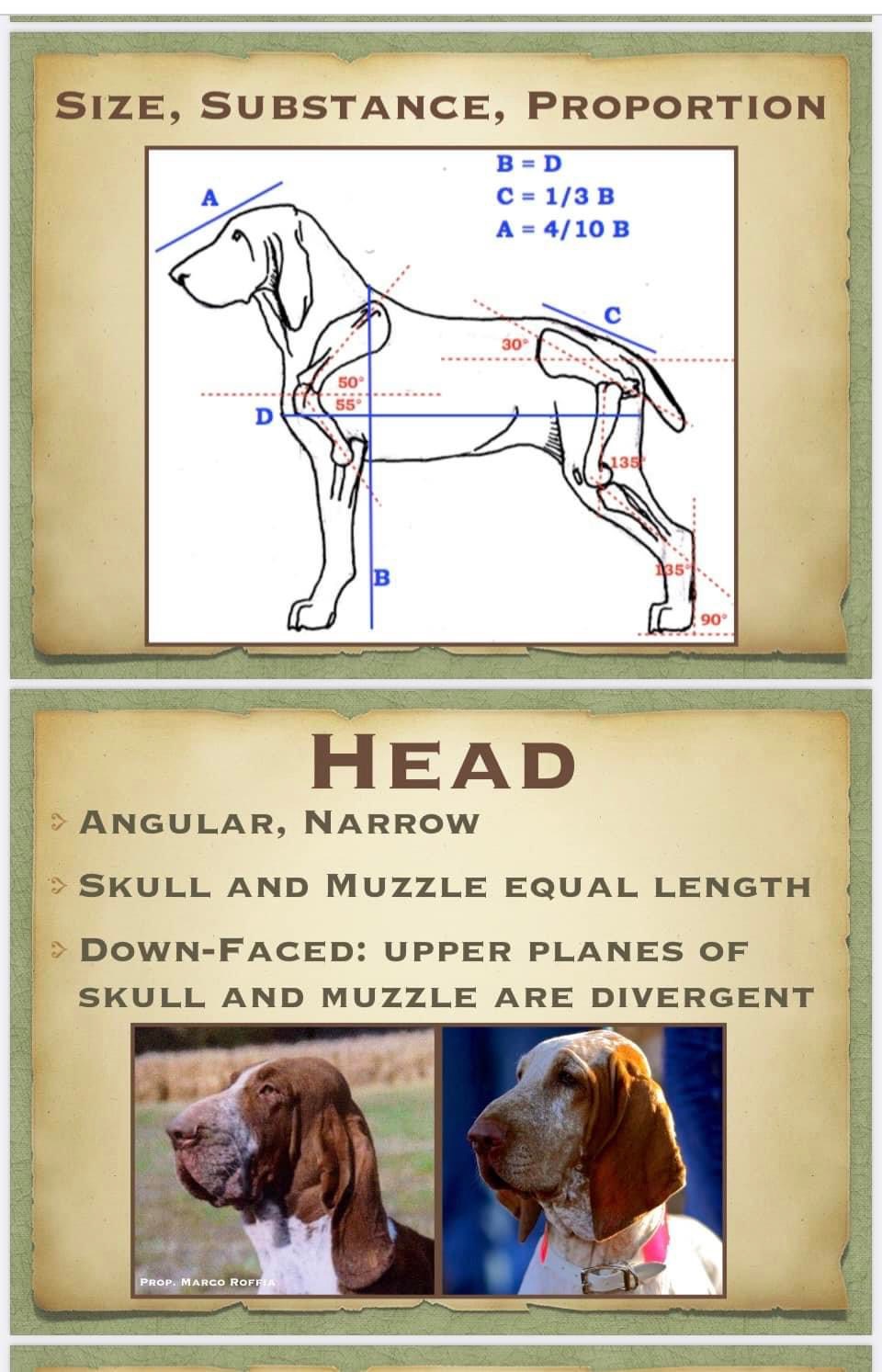
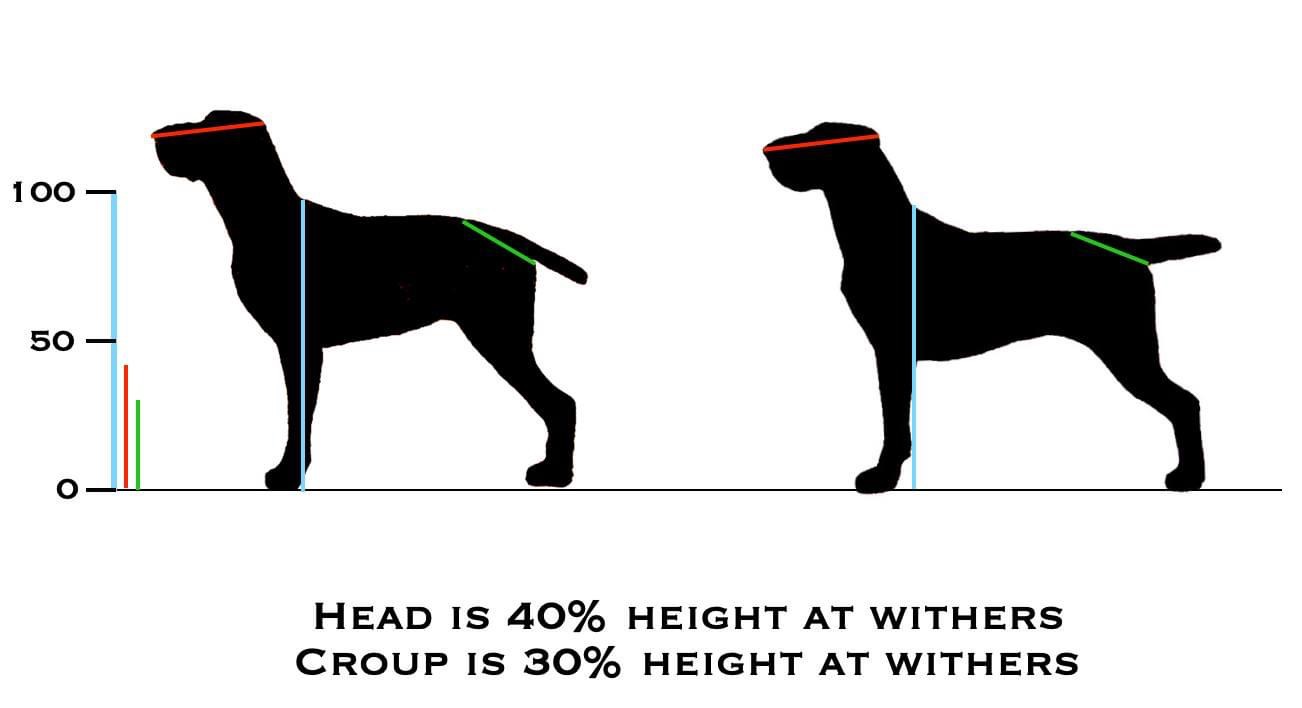
  • Head proportions: the head’s length is about 4/10 of the height at the withers; its width across the cheekbones is less than half its length; skull and muzzle are equal in length to one another.

Temperament

Tough and versatile enough for any style of hunting, reliable, quick to understand what’s being asked of it, docile, and easy to train — exactly the calm, biddable nature we see in our own dogs at home.

Head

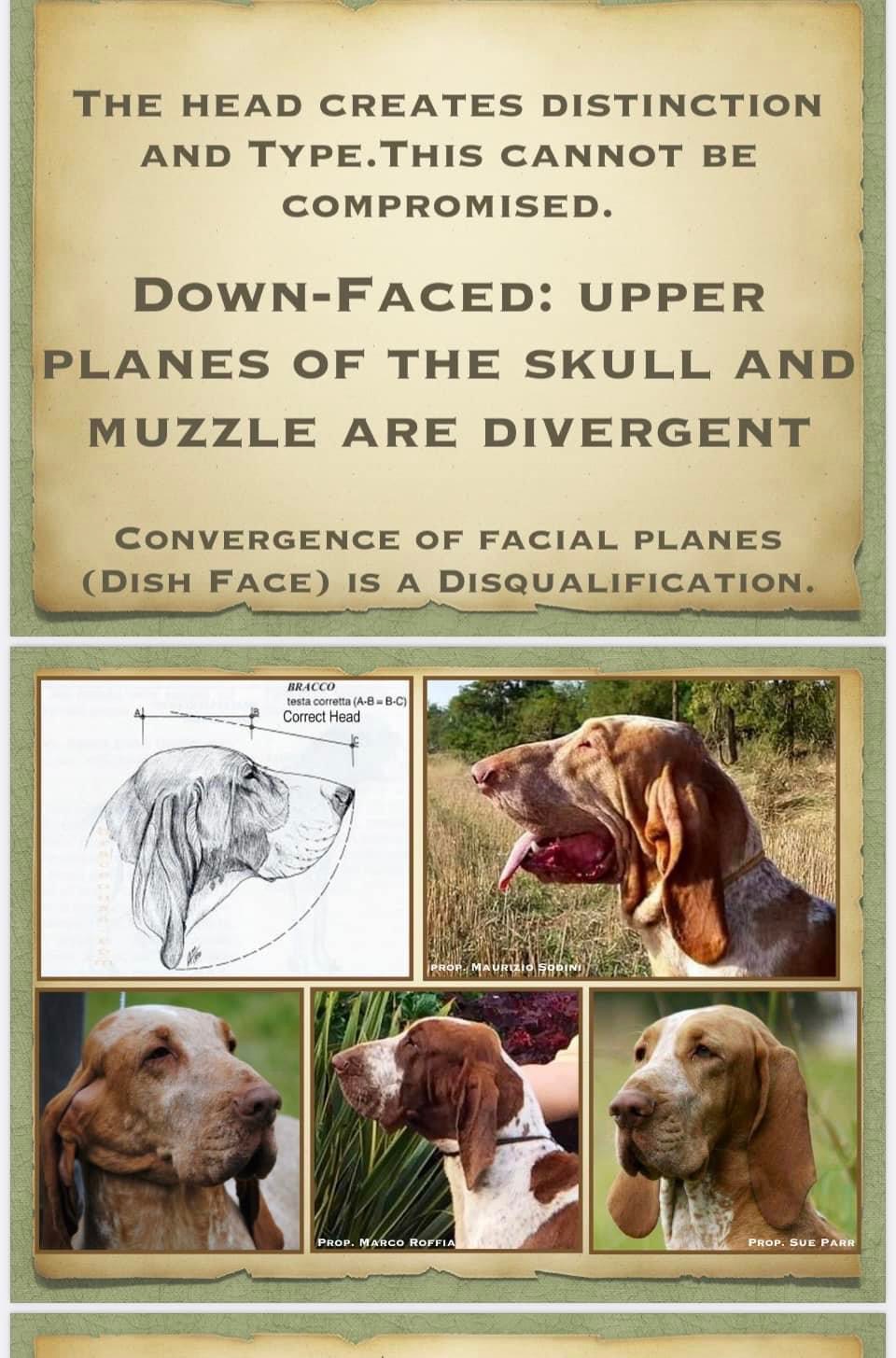
  • Overall shape: angular and narrow across the cheekbones; skull and muzzle equal in length. Crucially, the top lines of the skull and muzzle diverge — extending the line of the muzzle upward should bring it out in front of the back of the skull, ideally around its mid-point. This is the breed’s signature “down-faced” profile.
  • Skull: a broad, open arch in profile; an elongated oval from above. A visible central groove runs down the forehead to about mid-skull, with a noticeable bump at the back of the head (occipital protuberance) and only a slight stop.
  • Nose: large, with wide-open nostrils, sitting slightly forward of the lips; colour ranges from pink/flesh to brown depending on coat colour.
  • Muzzle: straight or very slightly arched, about half the head’s total length and quite deep; sides taper gently towards the nose without losing width; a barely visible chin.
  • Lips: full, thin, and a little floppy without being loose, covering the lower jaw and forming an inverted “V” under the nose when viewed from the front.
  • Bite: scissor bite preferred; a pincer (level) bite is also acceptable.
  • Eyes: set to the side, fairly large, oval lids fitting closely (no entropion or ectropion), with a soft, gentle expression. Iris colour follows coat colour — a more or less dark ochre or brown.
  • Ears: long (reaching roughly to the tip of the nose without stretching), at least half as wide as they are long, hanging with only a slight lift, set fairly far back and close to the cheek, with softly rounded tips.

Neck, body & tail

  • Neck: powerful and cone-shaped, at least two-thirds the length of the head, clearly set off from the nape, with a soft double dewlap at the throat.
  • Topline: two distinct lines — an almost straight slope from the withers down to roughly the 11th vertebra, then a gentle upward curve into the rump.
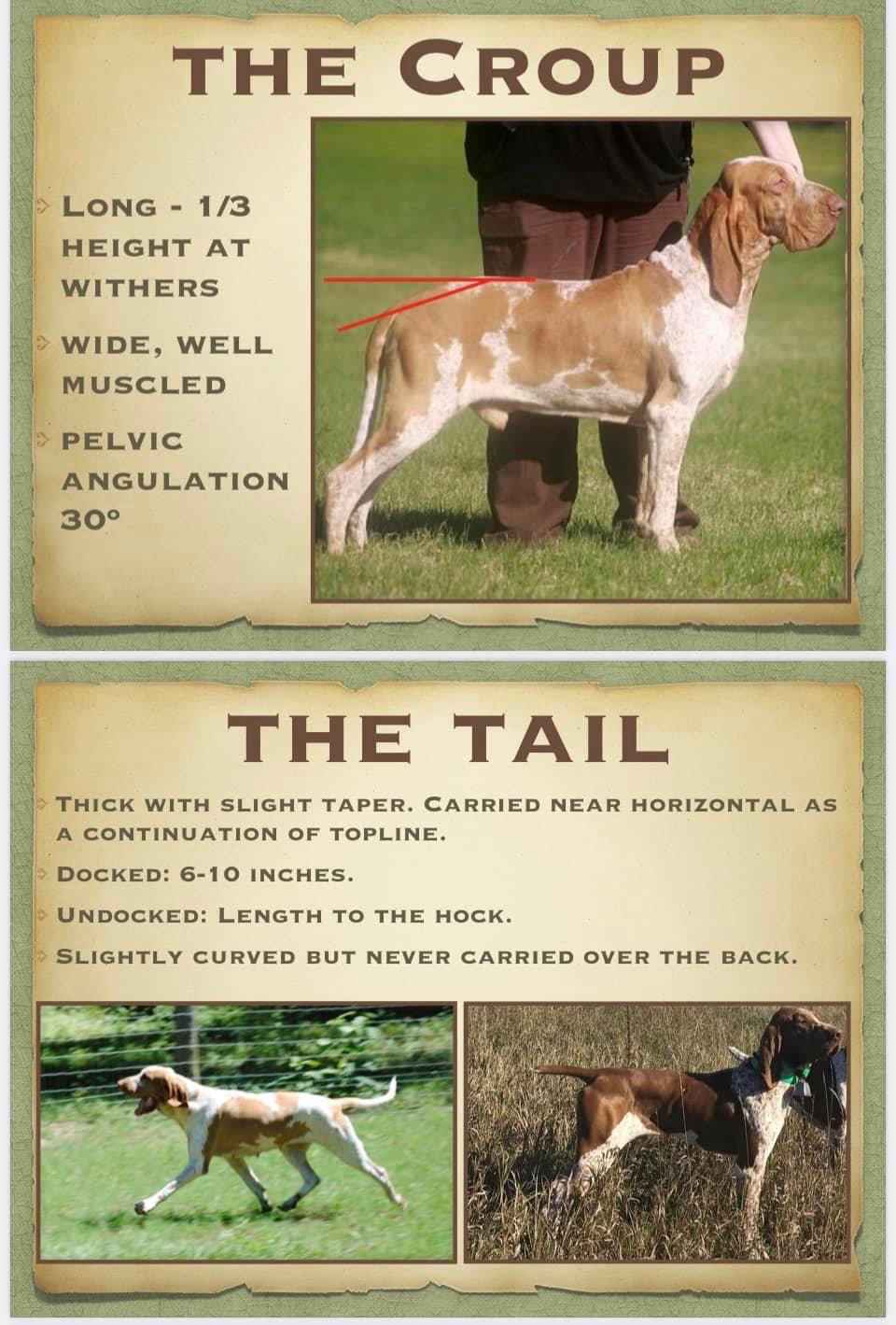
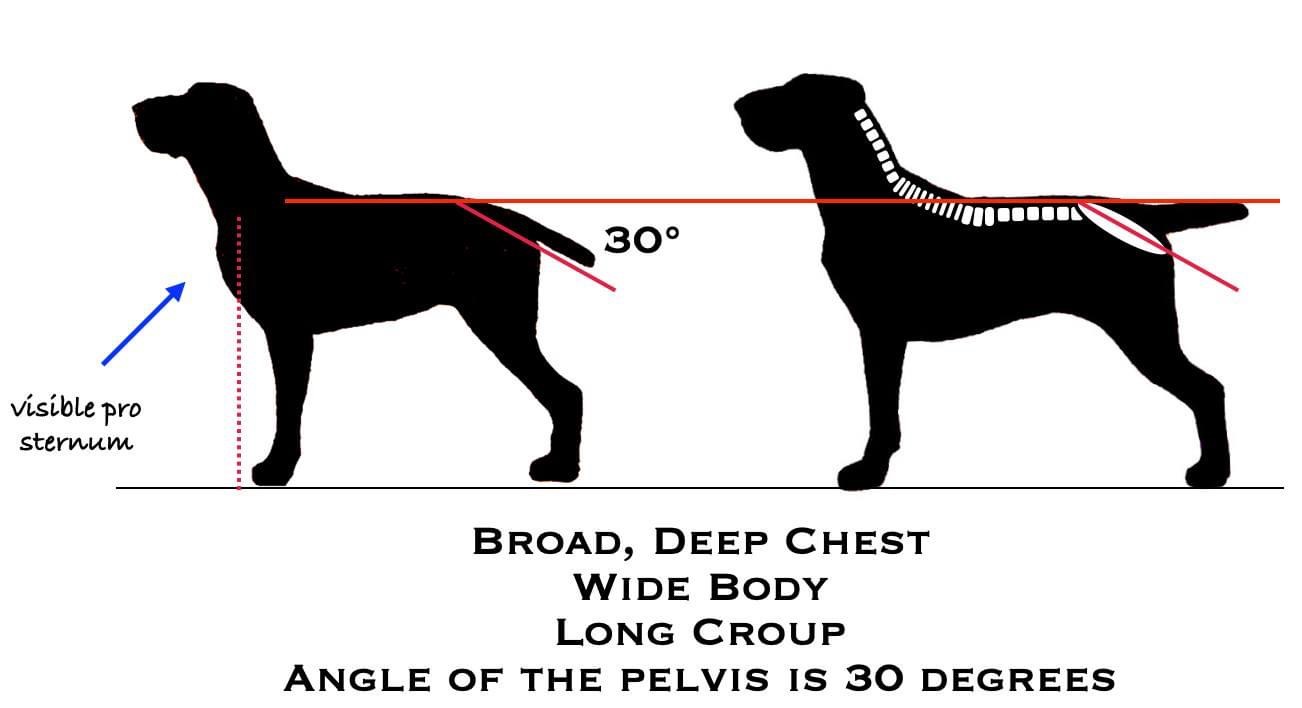
  • Withers, loin & croup: well-defined withers; a broad, muscled, short, slightly convex loin; a long, broad, well-muscled croup (about a third of the height at the withers) set at an ideal pelvic angle of around 30°.
  • Chest & underline: broad, deep chest reaching the elbows, well-sprung ribs (especially low down) without forming a keel; the underline runs almost level along the ribcage before lifting slightly at the belly.
  • Tail: thick at the root, straight, tapering slightly, short-haired; carried horizontally or close to it in action, especially while questing. Left natural it shouldn’t reach below the hock; where docking for hunting is still practised under local welfare rules, the standard specifies 15–25 cm from the root. An upturned tail is considered a serious fault.

Limbs & movement

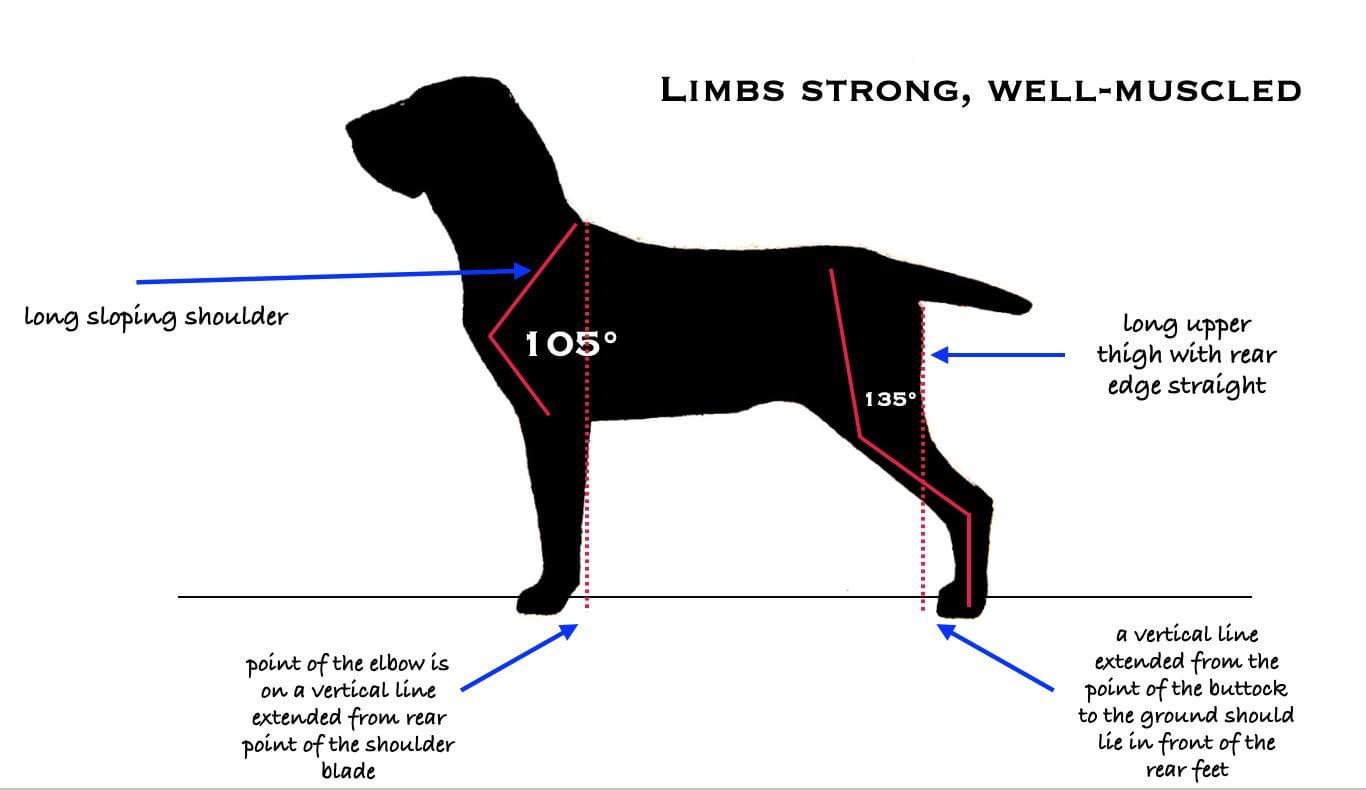
  • Forequarters: very free-moving, with strong, well-muscled, long, sloping shoulders; a sloping upper arm fitting close to the ribcage; straight, strong forearms with well-defined tendons; lean, well-proportioned, slightly sloping pasterns; and strong, slightly oval, well-arched feet with tight toes and strong, well-curved nails.
  • Hindquarters: long, parallel, muscular thighs with an almost straight rear edge; well-angulated stifles; strong lower thighs; broad hocks; relatively short, lean rear pasterns. Dewclaws are normal on the hind feet and their absence is not penalised; a double dewclaw is tolerated.
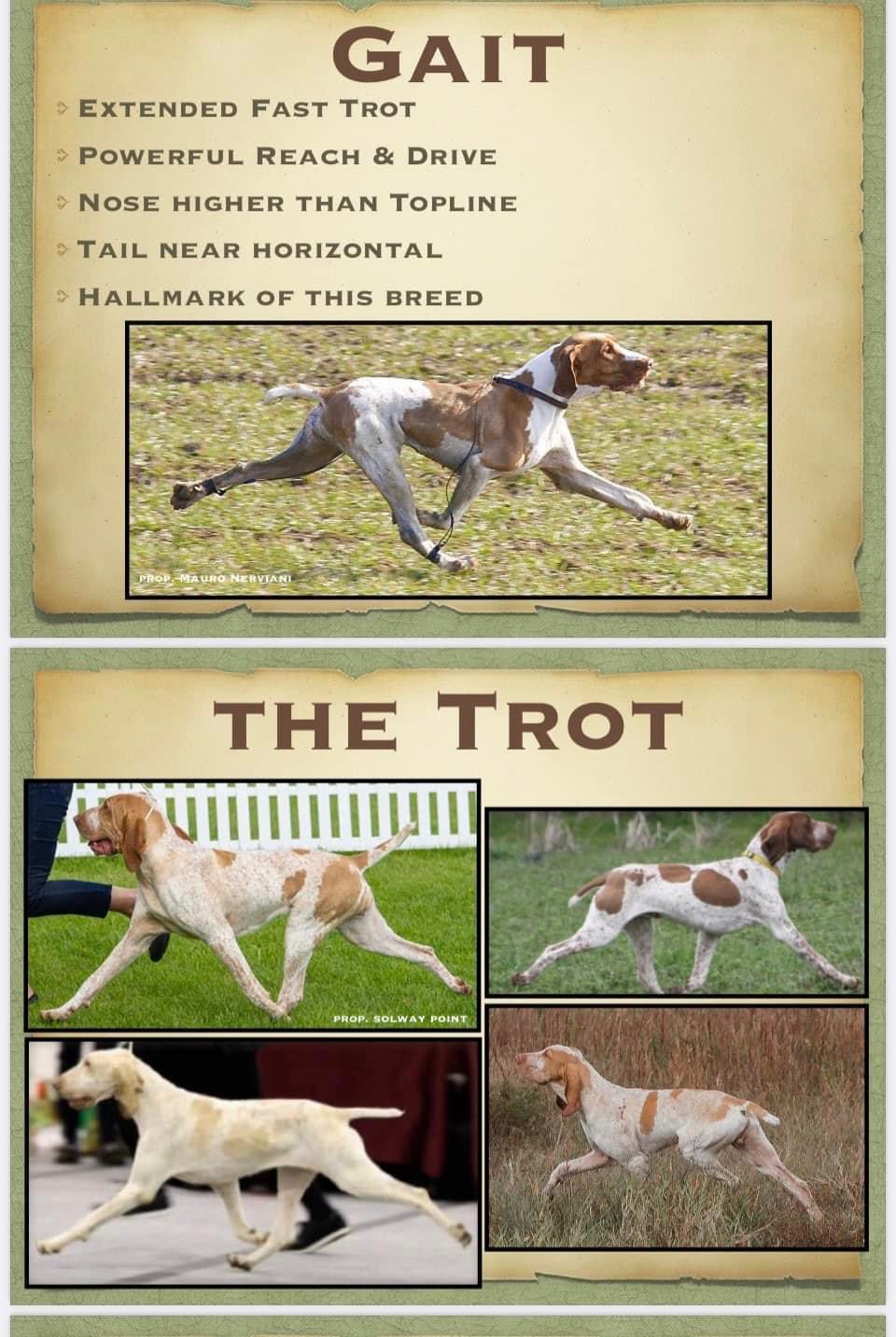
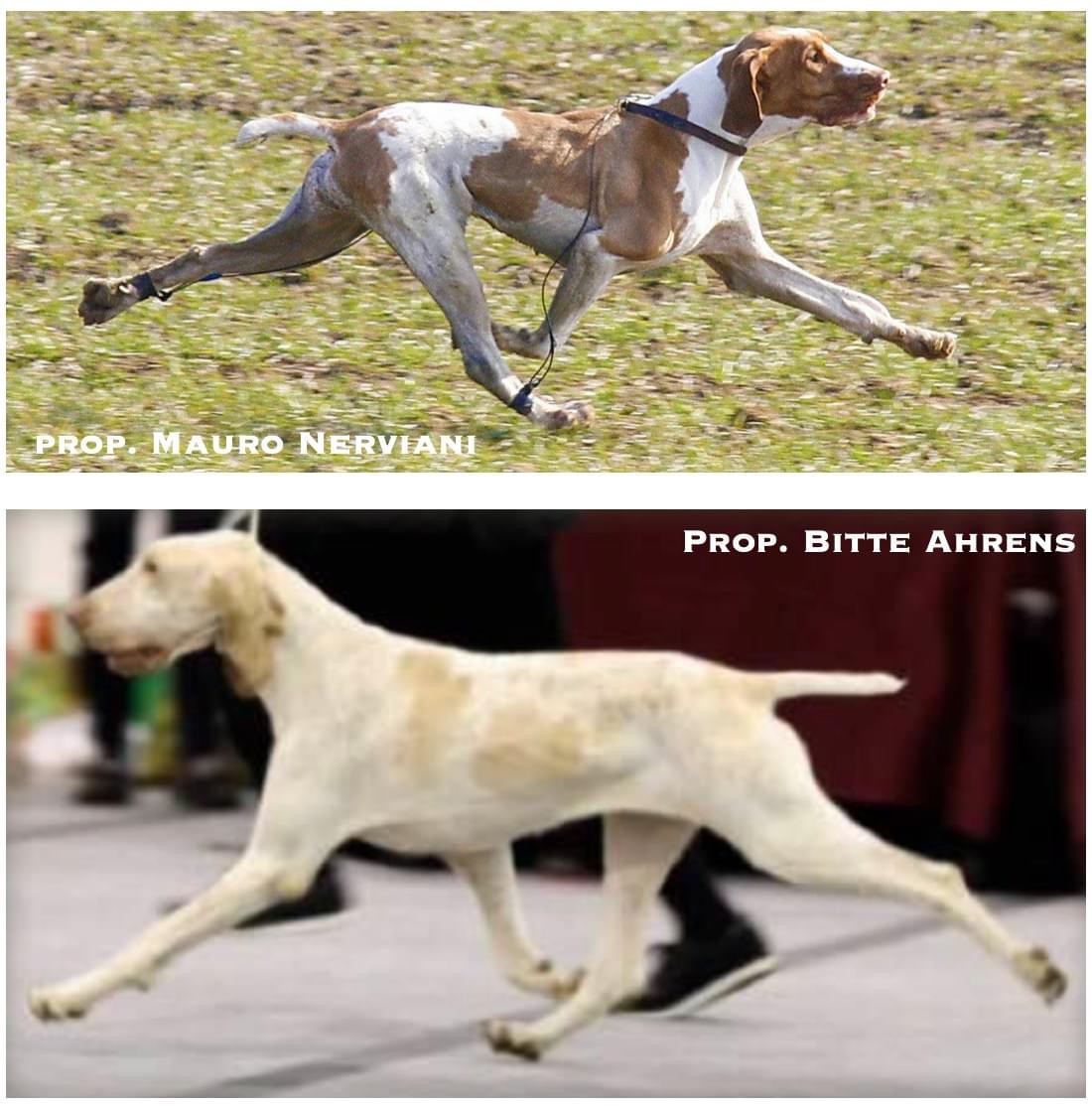
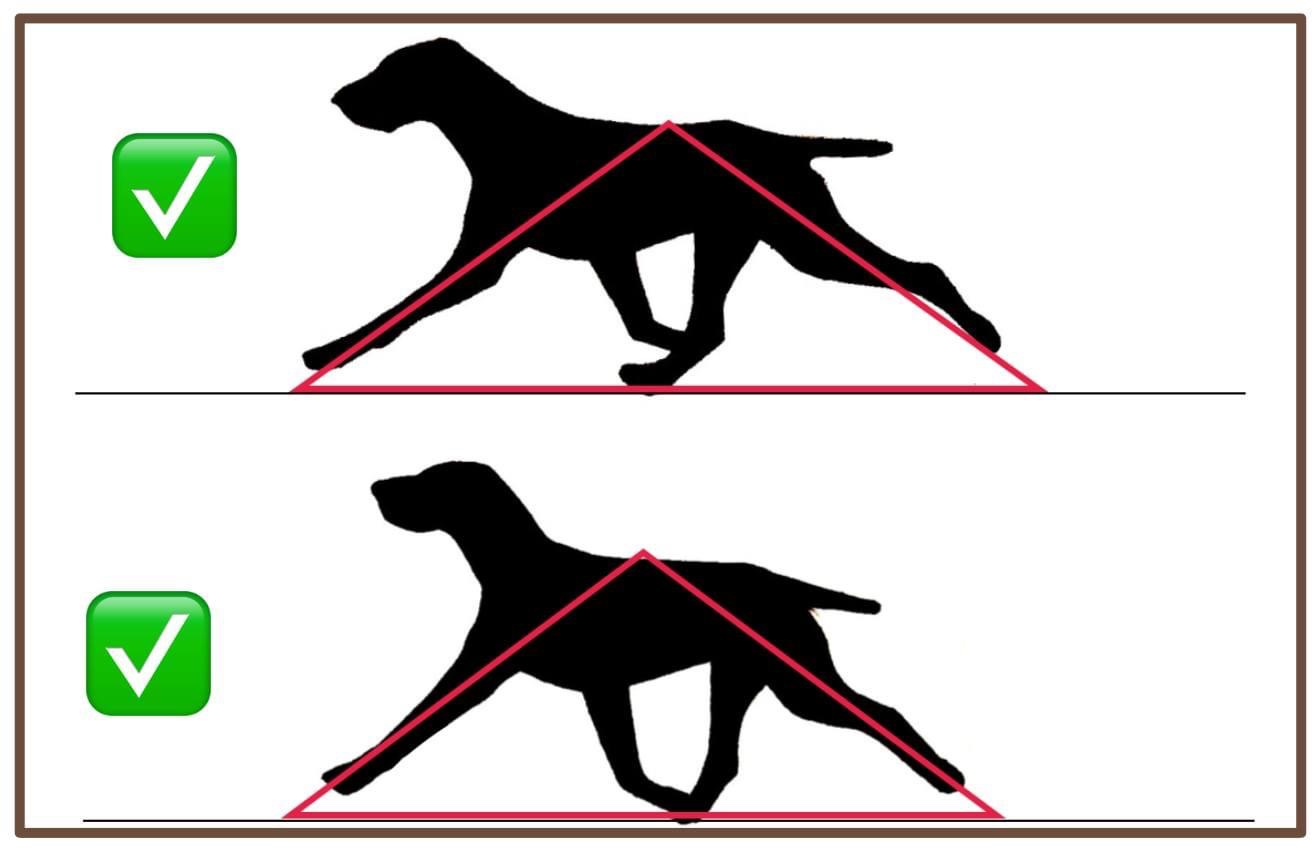
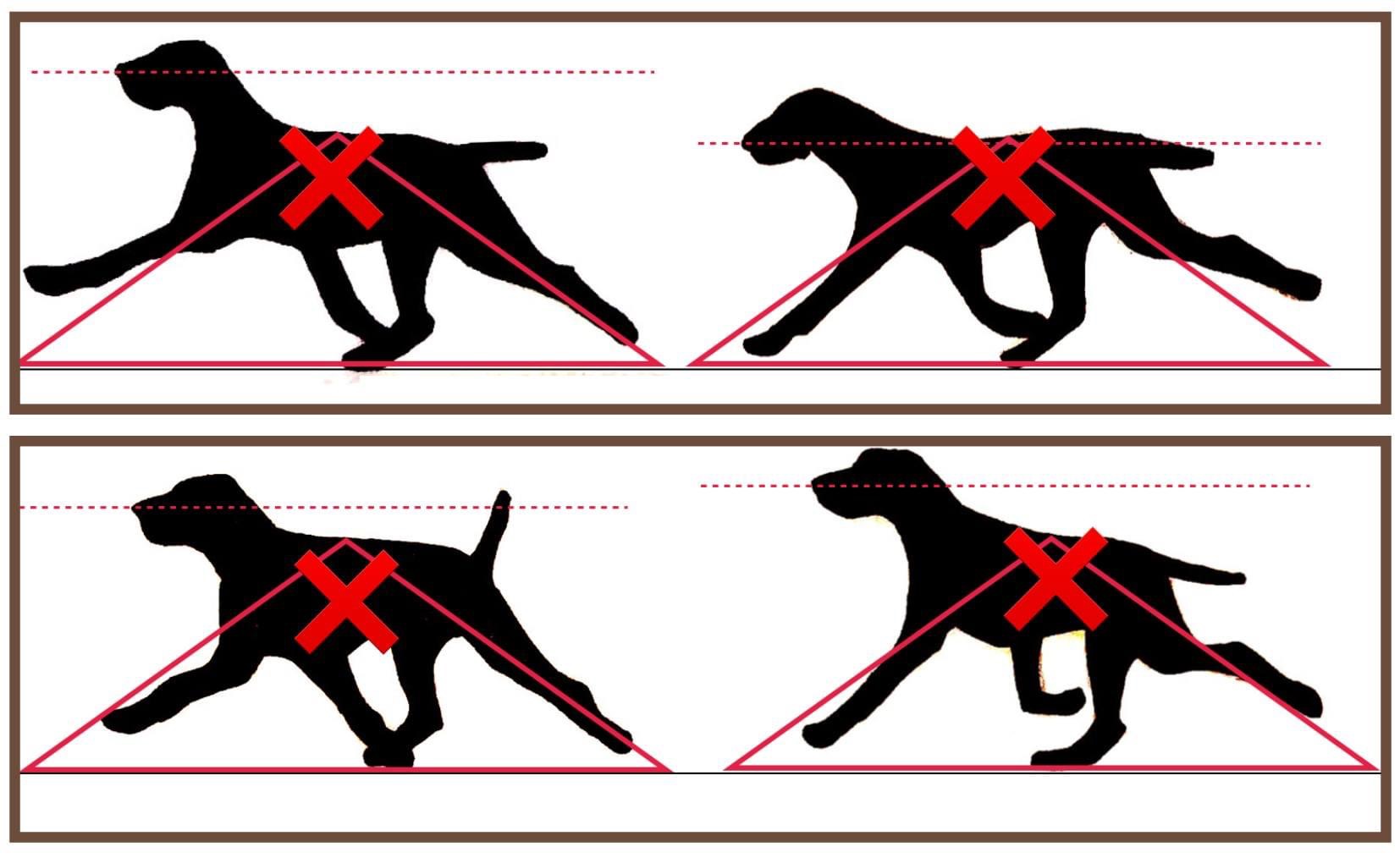
  • Gait: the hallmark extended, powerful trot, driven from behind, head held high and nose lifted well above the topline while working — built for covering wide ground efficiently and finding birds at a distance.

Skin & coat

  • Skin: tough but elastic, finer on the head, throat, armpits and underside; visible skin pigmentation should match the coat colour and never show black patches (a small amount of brown/pale-chestnut spotting is normal on roan or white-and-chestnut dogs).
  • Hair: short, dense and glossy all over, finer still on the head, ears, and the front of the legs and feet.
  • Permitted colours: solid white; white with orange-to-amber patches; white with brown (chestnut) patches; orange roan (white flecked with pale orange); and liver/brown roan (white flecked with brown, ideally with a warm, almost metallic sheen recalling a monk’s frock). A symmetrical facial mask is preferred but its absence is tolerated.
  • Disqualifying colours: black, white-and-black, tricolour, fawn, hazel, any solid self-colour, and tan markings are all outside the standard.

Size & weight

  • Height at the withers: 55–67 cm overall — ideally 58–67 cm for males and 55–62 cm for females.
  • Weight: 25–40 kg, in proportion to height.
  • Being more than 2 cm over or under the standard height range is treated as a severe fault.

Faults & disqualifications

As with every FCI standard, any deviation is judged in proportion to its severity and its real effect on the dog’s health, welfare, and working ability. Faults the standard specifically calls out as severe include a noticeably undershot mouth, excessive throat skin causing an exaggerated or undivided dewlap with heavy head wrinkling, being more than 2 cm outside the height range, and a tail carried upturned.

Disqualifying faults include aggression or excessive shyness, any clear physical or behavioural abnormality, a split nose, converging (rather than divergent) skull/muzzle planes, an overshot mouth, a wall eye, any disqualifying coat colour (see above), albinism, and skin pigmentation showing traces of black. The standard also requires that males have two normal testicles fully descended, and that only dogs that are clinically and functionally healthy, with breed-typical conformation, be used for breeding.

This summary reflects our own reading of the FCI standard and is provided for context, not as a substitute for it. For the exact, authoritative legal text, please consult the official documents below:
FCI-Standard N°202 (PDF, English) · ENCI Italy (PDF, Italian) · AKC version (PDF, English)

Illustrated Breed Standard — Structure & Movement

The diagrams below set out the key structural proportions and movement points of the breed standard in visual form — proportion, head, croup, tail, gait and correct vs. incorrect movement.

Source: Bracco Italiano Club (BIC), UK — “Illustrated Breed Standard” leaflet, braccoitalianoclub.co.uk. Individual photo credits appear on each diagram.

Working Standard (Field Ability)

Alongside the conformation standard, the Bracco Italiano is judged in the field against a working standard describing correct hunting behaviour and movement. The Kennel Club conformation standard’s Gait/Movement clause states: “True moving with powerful drive from hindquarters. Capable of untiring, extended fast trot. Head carried raised above topline.”

The Pastrone (Working) Standard, 1937 — full text

The gait is a trot, long and brisk. Brief periods of galloping are tolerated when re-crossing previously covered ground, at the beginning of the hunt or in cases where the dog encounters a new situation. Above all, the rule when working scent is the trot, this is a lively movement that covers the ground well.

The dog during the hunt should quarter at distances of 100 metres or more from the handler and the spacing of its cast should reflect the terrain, wind and scenting conditions. These actions confirm that the dog is hunting correctly.

It is evident that in the Bracco Italiano (as with the other trotters) the preoccupation with the scent is of prime importance. Unlike the lightning reaction of the great gallopers, the Italian Bracchi treat the process as a complex mental action — this is easily read in his expression, which is one of thought. The hunt is extremely diligent and enjoyed by the dog with its tail carried horizontally or slightly higher, constantly moving rhythmically from side to side as the dog moves (not rapidly as with the spaniel). The neck should be a little extended in order to hold the head high with the nose angled acutely from the horizontal.

Upon detecting scent the dog gradually slows and returns extremely prudently towards its presumed origin, head held high as described above, its ears cocked and tail motionless and slightly lowered. If the dog realises that it is on residual (old) scent then he should resume the hunt as before. If however he decides that the scent is leading him closer to game he should slow and his final steps should be very slow, often gently feeling the ground with his paw before putting his weight on it as if afraid to make a noise.

When pointing, his tail may be horizontal, slightly raised, or slightly lowered but always motionless.

The overall deportment of the dog is noble, imposing, alert but calm, erect and slightly forward balanced. The neckline should be a little raised and the head carried up with the nose decisively towards the ground (approx. 30 degrees from the horizontal).

If while hunting he encounters scent which indicates that game is very close, he will immediately slow and take up a posture similar to when standing still, only with his neckline a little more pronounced and the tail a little lower. He will then gradually take up the behaviour described above, following the scent which brings him into contact with the game. Sometimes this movement is preceded by an undesirable short stop.

A dog that senses he is suddenly upon the game (and only in this case) will stop immediately. He will stay, more often than not, upright, or with the limbs a little flexed with the head turned down towards the game. Exceptionally the dog may halt in a contorted or twisted pose.

If the game attempts to escape along the ground while being hunted, the dog should guide it to the wind by its own physical movement, exercising caution not to disturb, where possible, dry branches or noisy leaves while maintaining contact with it.

While the game is moving the dog should track it without slowing or stopping unnecessarily, demonstrating that all its described characteristics do not prevent it from being a tenacious tracker. It may be that in these circumstances a dog comes to an abrupt halt should it suddenly encounter game which has, in an attempt to escape, turned back after encountering an obstacle.

A characteristic of the Bracco (and the other continental breeds) is that it should have complete contact with its handler, which the dog should always maintain. The dog’s calm and reflective nature is ideal for training for work in all conditions, whether in open country or more dense areas where a tighter working pattern is desirable.

Source: Bracco Italiano Club (BIC), UK — “Illustrated Breed Standard” leaflet, braccoitalianoclub.co.uk, reproducing the Pastrone (working) Standard of 1937.

Living with a Bracco Italiano — From Our Own Experience

Standards describe the dog on paper; daily life with one is something else. Here is what years of breeding, training, hunting, and simply sharing a home with our Bracchi have taught us:

  • They are not “independent” dogs. A Bracco wants to be part of everything you do — cooking, walking, working, resting. Dogs that are left to entertain themselves for long stretches tend to find their own — usually less convenient — ways to do it.
  • Exercise alone is not enough. Long walks matter, but a Bracco is bred to think and cooperate with a handler. Short, regular moments of engagement — recall games, scent work, retrieving, simple obedience — make a far bigger difference than distance covered.
  • Excellent with other dogs, when socialised properly. Our oldest dog, Aldo, has effectively trained every nervous puppy and overconfident adolescent that has come through our door — calm correction, not conflict.
  • Water-confident and food-driven. Most Bracchi take naturally to swimming and retrieving, and have, let’s say, a famously enthusiastic relationship with food.
  • Gentle but not a “soft” breed. Calm and affectionate at home, but still a working hunting dog underneath — it needs an owner who can offer structure as well as affection.
  • Every dog is an individual. Drive, swimming style, food obsession, or working intensity vary widely even within the same litter — which is half the fun of living with more than one.

Wondering whether this breed actually fits your lifestyle? Read our article “Is the Bracco Italiano the Right Breed for You?” — and follow daily life with our dogs on Instagram.


Scroll to Top

About Bracco Italiano

The Bracco Italiano is one of the oldest pointing breeds in Europe — a true Italian hunting dog built for stamina, scenting power, and an unmistakably close bond with its handler. This page brings together the official breed standards and what four years of living, training, and hunting with our own Bracchi have taught us about the breed.

1. A Short History

The Bracco Italiano descends from ancient Italian pointing dogs depicted in art and texts dating back several centuries, with two regional lines — the heavier, white-and-chestnut Piedmontese type and the more compact, white-and-orange Lombard type — eventually merging into the single breed recognised today. The breed nearly disappeared after the Second World War, surviving thanks to a small number of dedicated Italian breeders, and has since spread internationally as both a serious hunting companion and a family dog.

2. A Glimpse Into the Past

The Bracco Italiano's roots run deep — Italian pointing dogs of this type appear in art and sporting literature long before the breed had a written standard. A few historical glimpses, all public-domain:
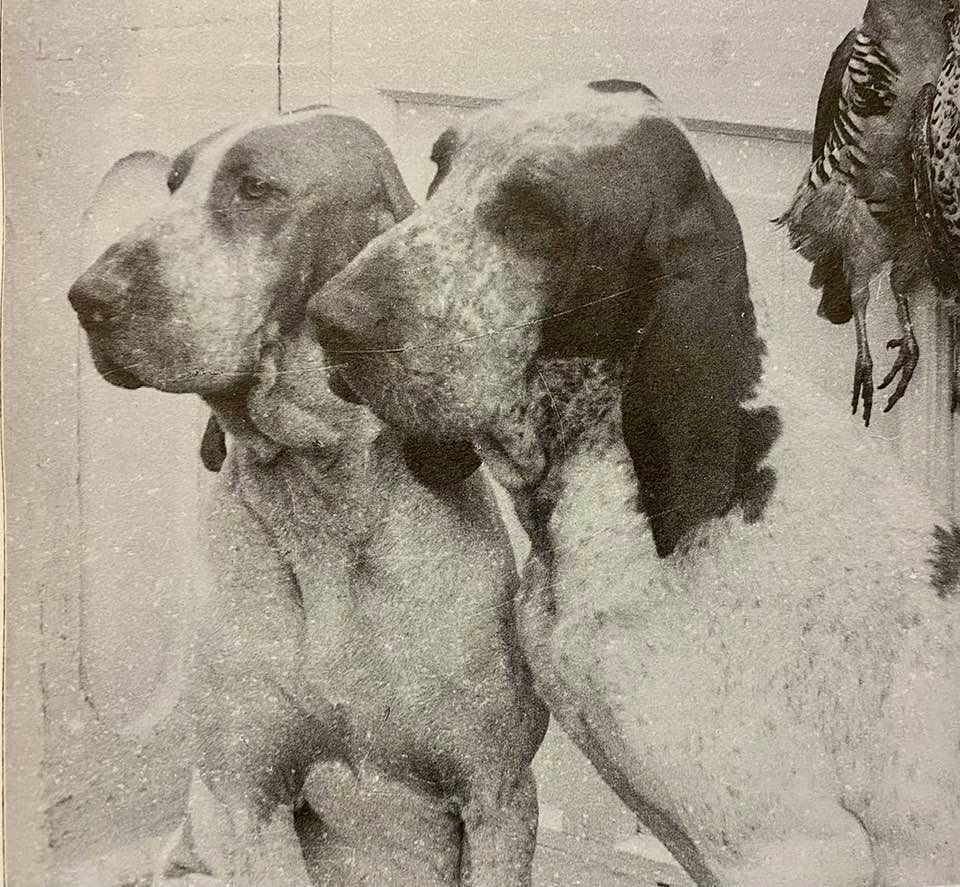
Historical photographs courtesy of the Bracco Italiano Database (Facebook).

3. FCI Breed Standard (Conformation)

FCI-Standard N°202 · BRACCO ITALIANO (Italian Pointing Dog) · 17.12.2015

Below is the full text of the official FCI breed standard, reproduced in full for reference. Translation: Mrs. Peggy Davies, revised by SABI and Mrs. Renée Sporre-Willes. Official language (EN). Origin: Italy. Date of publication of the official valid standard: 13.11.2015. Utilization: Pointing dog. FCI-Classification: Group 7 Pointing Dogs, Section 1 Continental pointing dogs, type "Braque", with working trial.

Brief historical summary

This dog of ancient Italian origin used for bird hunting has modelled itself and developed over the ages; from the hunting of yester years by means of hunt and shooting. Frescoes from the 14th century are proof of the indisputable timelessness of the Italian pointer over the centuries, regarding his morphology or his hunting aptitudes as a pointing dog. Selected for great ability in fast and wide trot and by nature an excellent retriever.

General appearance

Of strong and harmonious construction, powerful appearance. The preferred subjects are those with lean limbs, well developed muscles, well defined lines with a markedly sculpted head and a very obvious lower orbital chiselling, elements which all contribute to give distinction to this breed.

Important proportions

Length of the body is the same or a little more than the height at the withers. Length of head is equal to 4/10 of the height at the withers; its width, measured at the level of the zygomatic arches, is less than half its length. Skull and muzzle are of equal length.

Behaviour / Temperament

Tough and adapted to all types of hunting, reliable, endowed with an excellent ability to understand, docile and easy to train.

Head

Angular and narrow at the level of the zygomatic arches; the length of the skull equals the length of the muzzle. The upper longitudinal axes of the skull and muzzle are divergent, i.e. if extending the top line of the muzzle the latter must emerge in front of the occipital protuberance, ideally at mid-length of the skull.

Cranial region — Skull: Seen in profile, the skull is in the shape of a very open arch. Seen from above, it forms lengthwise an elongated ellipse. The width of the skull, measured at the level of the zygomatic arches, should not exceed half of the length of the head. The bulge of the forehead and the supraorbital ridges are perceptible. The frontal groove is visible and ends at mid-length of the skull. The interparietal crest is short and not very prominent. The occipital protuberance is pronounced.

Stop: Not pronounced.

Facial region — Nose: Voluminous, with large well-opened nostrils, protruding slightly over the lips with which it forms an angle. Colour is more or less pink – to flesh-coloured or brown, depending on the colour of the coat.

Muzzle: Either slightly arched or straight. Its length is equal to half of the length of the head and its depth measures 4/5 of its length. Seen from the front, the lateral sides of the muzzle converge slightly, still presenting a foreface of good width. The chin is not very apparent.

Lips: Upper lips well developed, thin and floppy without being flaccid, covering the jaw; seen in profile, they overlap the lower jaw slightly. Seen from the front, they form an inverted « V » below the nose; the corner of the lips must be marked without being droopy.

Jaws/Teeth: Dental arches well adapted, with the teeth square set to the jaw; scissor bite. A pincer bite is also acceptable.

Cheeks: Lean.

Eyes

Semi-lateral position with a soft and submissive expression, neither deep set nor prominent. Eyes fairly large, eyelids oval-shaped and close fitting (no entropion or ectropion). The iris is of a more or less dark ochre or brown colour depending on the coat colour.

Ears

Long, they should reach the tip of the nose without being stretched. Their width is at least equal to half their length; raised only very slightly; base rather narrow, set rather backwards at level of zygomatic arches; a supple ear with a front rim well turned inwards and really close to the cheek is appreciated; the tips are slightly rounded.

Neck

Powerful, in truncated cone shape, length not less than 2/3 of the length of the head, well detached from the nape. The throat shows a soft double dewlap.

Body

Topline: The topline presents two lines: one, almost straight, slopes from the withers to the 11th dorsal vertebra; the other is slightly arched, joining with the line of the rump.

Withers: Well defined, with the points of the shoulder blades well separated.

Loin: Wide lumbar region, muscled, short and slightly convex.

Croup: Long (about 1/3 of the height at the withers), broad and well muscled; the ideal pelvic angulation (angle formed by the pelvic girdle with a horizontal line) is 30°.

Chest: Broad, deep and well let down to the elbows, without forming a keel, with well-sprung ribs, particularly in the lower part.

Underline and belly: Lower profile almost horizontal along the ribcage rising slightly at the abdomen.

Tail

Thick at the base, straight, with a slight tendency to taper; hair short. When the dog is in action and especially when questing, it is carried horizontally or nearly. The natural tail should not extend below the hock and have the above-mentioned features. If docked, for hunting purposes and in compliance with health and animal welfare, the tail must have a length of 15–25 cm from the root.

Limbs — Forequarters

General appearance: Very free in movement.

Shoulder: Strong, well muscled, long and sloping.

Upper arm: Sloping, fitting to the ribcage.

Elbow: The point of the elbow should be on perpendicular line from the rear point of the shoulder blade to the ground.

Forearm: Strong, straight, with strong and well marked sinews.

Metacarpus (Pastern): Well proportioned, lean, of good length and slightly sloping.

Forefeet: Strong, slightly oval shaped; well arched with tight toes and strong nails well curved towards the ground. Colour of nails is white, yellow or brown, of a more or less dark shade depending on the colour of the coat; pads elastic and lean.

Limbs — Hindquarters

Thigh: Long, parallel, muscular, with a rear edge almost straight.

Stifle (Knee): Well angulated.

Lower thigh: Strong.

Hock joint: Broad.

Metatarsus (Rear pastern): Relatively short and lean.

Hind feet: With all the characteristics of the forefeet: they have dewclaws, the absence of which is not a fault. Double dewclaw is tolerated.

Gait / Movement

Extended and fast trot, with powerful propulsion from the hindquarters, head raised and nose held high in such a way that, when hunting, the nose is higher than the topline.

Skin

Tough but elastic; finer on the head, the throat, the armpits and on the lower parts of the body. The visible pigmentation must be of a corresponding colour with the coat, and never show black spots. The pigmentation of the mouth is pink; in the roans or white and chestnut coloured dogs they sometimes show brown or pale chestnut spotting.

Coat

Hair: Short, dense and glossy, finer and shorter on the head, the ears, front part of the legs and feet.

Colour: White. White with patches of varied size of an orange or more or less dark amber colour. White with more or less large brown patches. White speckled with pale orange, i.e. orange roan. White speckled with brown, i.e. liver roan. In this last combination, a metallic sheen is appreciated, and a warm shade of brown is preferred, recalling the colour of a monk's frock. A symmetrical facial mask is preferred, but the absence of a mask is tolerated.

Size and weight

Height at the withers: 55–67 cm. Preferred size for males: 58–67 cm. Preferred size for females: 55–62 cm. Weight: Between 25 and 40 kg depending on size.

Faults

Any departure from the foregoing points should be considered a fault and the seriousness with which the fault should be regarded should be in exact proportion to its degree and its effect upon the health and welfare of the dog and on its ability to perform its traditional work.

Severe faults

Accentuated undershot mouth. Excessive amount of skin causing an exaggerated dewlap or an un-divided dewlap and too many wrinkles on the head. Size, 2 cm above or below the standard height at the withers. An upturned tail is highly undesirable.

Disqualifying faults

Aggressive or overly shy dogs. Any dog clearly showing physical or behavioural abnormalities. Split nose. Convergence of cranio-facial axes. Overshot mouth. Wall eye. Coat black, white and black, tricolour, fawn, hazel, unicolour and tan markings. Absence of pigmentation (Albinism). Pigmentation of skin and annexes with traces of black.

N.B.

Male animals should have two apparently normal testicles fully descended into the scrotum. Only functionally and clinically healthy dogs, with breed typical conformation, should be used for breeding.

Full text of FCI-Standard N°202, 17.12.2015, reproduced for reference. For the original PDF: FCI-Standard N°202 (PDF).

4. Illustrated Breed Standard — Structure & Movement

The diagrams below set out the key structural proportions and movement points of the breed standard in visual form — proportion, head, croup, tail, gait and correct vs. incorrect movement.

Source: Bracco Italiano Club (BIC), UK — "Illustrated Breed Standard" leaflet.

5. Working Standard (Field Ability)

Alongside the conformation standard, the Bracco Italiano is judged in the field against a working standard describing correct hunting behaviour and movement. The Kennel Club standard's Gait/Movement clause: "True moving with powerful drive from hindquarters. Capable of untiring, extended fast trot. Head carried raised above topline."

The Pastrone (Working) Standard, 1937

The gait is a trot, long and brisk. Brief periods of galloping are tolerated when re-crossing previously covered ground. Above all, the rule when working scent is the trot — a lively movement that covers the ground well.

During the hunt the dog should quarter at distances of 100 metres or more from the handler, its cast reflecting the terrain, wind and scenting conditions. Unlike the lightning reaction of the great gallopers, the Italian Bracchi treat scenting as a complex mental action — easily read in an expression of thought.

Upon detecting scent the dog gradually slows and returns prudently towards its presumed origin, head held high, ears cocked and tail motionless and slightly lowered. If it decides the scent is leading closer to game, its final steps become very slow.

When pointing, the tail may be horizontal, slightly raised, or slightly lowered but always motionless. Overall deportment is noble, imposing, alert but calm, erect and slightly forward balanced.

A dog that senses it is suddenly upon the game will stop immediately. If the game attempts to escape along the ground, the dog should guide it to the wind by its own movement, careful not to disturb dry branches or noisy leaves.

A characteristic of the Bracco is that it should maintain complete contact with its handler at all times. Its calm and reflective nature is ideal for training in all conditions.

Source: Bracco Italiano Club (BIC), UK, reproducing the Pastrone (working) Standard of 1937.

6. Living with a Bracco Italiano — From Our Own Experience

Standards describe the dog on paper; daily life with one is something else. Here is what years of breeding, training, hunting, and simply sharing a home with our Bracchi have taught us:

They are not "independent" dogs

A Bracco wants to be part of everything you do. Left alone too long, they find their own — usually less convenient — ways to entertain themselves.

Exercise alone is not enough

A Bracco is bred to think and cooperate with a handler. Short, regular engagement makes a bigger difference than distance covered.

Excellent with other dogs, when socialised properly

Our oldest dog, Aldo, has trained every nervous puppy and overconfident adolescent through our door — calm correction, not conflict.

Water-confident and food-driven

Most Bracchi take naturally to swimming and retrieving, and have a famously enthusiastic relationship with food.

Gentle but not a "soft" breed

Calm and affectionate at home, but still a working hunting dog underneath.

Every dog is an individual

Drive, swimming style, food obsession, or working intensity vary widely even within the same litter.

Read: Is the Bracco Italiano Right for You? →
🇮🇹 🇵🇱

About Bracco Italiano

The Bracco Italiano is one of the oldest pointing breeds in Europe — a true Italian hunting dog built for stamina, scenting power, and an unmistakably close bond with its handler. This page brings together the official breed standards and what four years of living, training, and hunting with our own Bracchi have taught us about the breed.

1. A Short History

The Bracco Italiano descends from ancient Italian pointing dogs depicted in art and texts dating back several centuries, with two regional lines — the heavier, white-and-chestnut Piedmontese type and the more compact, white-and-orange Lombard type — eventually merging into the single breed recognised today. The breed nearly disappeared after the Second World War, surviving thanks to a small number of dedicated Italian breeders, and has since spread internationally as both a serious hunting companion and a family dog.

2. A Glimpse Into the Past

The Bracco Italiano's roots run deep — Italian pointing dogs of this type appear in art and sporting literature long before the breed had a written standard. A few historical glimpses, all public-domain:
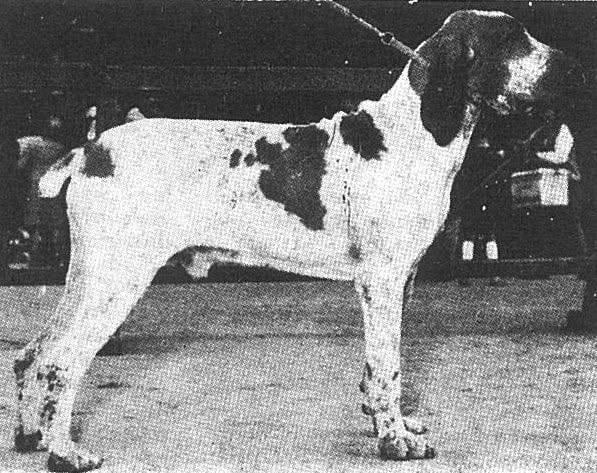
See the full gallery of historic Bracco Italiano photos →

Historical photographs courtesy of the Bracco Italiano Database (Facebook).

3. FCI Breed Standard (Conformation)

FCI-Standard N°202 · BRACCO ITALIANO (Italian Pointing Dog) · 17.12.2015

Below is the full text of the official FCI breed standard, reproduced in full for reference. Translation: Mrs. Peggy Davies, revised by SABI and Mrs. Renée Sporre-Willes. Official language (EN). Origin: Italy. Date of publication of the official valid standard: 13.11.2015. Utilization: Pointing dog. FCI-Classification: Group 7 Pointing Dogs, Section 1 Continental pointing dogs, type "Braque", with working trial.

Brief historical summary

This dog of ancient Italian origin used for bird hunting has modelled itself and developed over the ages; from the hunting of yester years by means of hunt and shooting. Frescoes from the 14th century are proof of the indisputable timelessness of the Italian pointer over the centuries, regarding his morphology or his hunting aptitudes as a pointing dog. Selected for great ability in fast and wide trot and by nature an excellent retriever.

General appearance

Of strong and harmonious construction, powerful appearance. The preferred subjects are those with lean limbs, well developed muscles, well defined lines with a markedly sculpted head and a very obvious lower orbital chiselling, elements which all contribute to give distinction to this breed.

Important proportions

Length of the body is the same or a little more than the height at the withers. Length of head is equal to 4/10 of the height at the withers; its width, measured at the level of the zygomatic arches, is less than half its length. Skull and muzzle are of equal length.

Behaviour / Temperament

Tough and adapted to all types of hunting, reliable, endowed with an excellent ability to understand, docile and easy to train.

Head

Angular and narrow at the level of the zygomatic arches; the length of the skull equals the length of the muzzle. The upper longitudinal axes of the skull and muzzle are divergent, i.e. if extending the top line of the muzzle the latter must emerge in front of the occipital protuberance, ideally at mid-length of the skull.

Cranial region — Skull: Seen in profile, the skull is in the shape of a very open arch. Seen from above, it forms lengthwise an elongated ellipse. The width of the skull, measured at the level of the zygomatic arches, should not exceed half of the length of the head. The bulge of the forehead and the supraorbital ridges are perceptible. The frontal groove is visible and ends at mid-length of the skull. The interparietal crest is short and not very prominent. The occipital protuberance is pronounced.

Stop: Not pronounced.

Facial region — Nose: Voluminous, with large well-opened nostrils, protruding slightly over the lips with which it forms an angle. Colour is more or less pink – to flesh-coloured or brown, depending on the colour of the coat.

Muzzle: Either slightly arched or straight. Its length is equal to half of the length of the head and its depth measures 4/5 of its length. Seen from the front, the lateral sides of the muzzle converge slightly, still presenting a foreface of good width. The chin is not very apparent.

Lips: Upper lips well developed, thin and floppy without being flaccid, covering the jaw; seen in profile, they overlap the lower jaw slightly. Seen from the front, they form an inverted « V » below the nose; the corner of the lips must be marked without being droopy.

Jaws/Teeth: Dental arches well adapted, with the teeth square set to the jaw; scissor bite. A pincer bite is also acceptable.

Cheeks: Lean.

Eyes

Semi-lateral position with a soft and submissive expression, neither deep set nor prominent. Eyes fairly large, eyelids oval-shaped and close fitting (no entropion or ectropion). The iris is of a more or less dark ochre or brown colour depending on the coat colour.

Ears

Long, they should reach the tip of the nose without being stretched. Their width is at least equal to half their length; raised only very slightly; base rather narrow, set rather backwards at level of zygomatic arches; a supple ear with a front rim well turned inwards and really close to the cheek is appreciated; the tips are slightly rounded.

Neck

Powerful, in truncated cone shape, length not less than 2/3 of the length of the head, well detached from the nape. The throat shows a soft double dewlap.

Body

Topline: The topline presents two lines: one, almost straight, slopes from the withers to the 11th dorsal vertebra; the other is slightly arched, joining with the line of the rump.

Withers: Well defined, with the points of the shoulder blades well separated.

Loin: Wide lumbar region, muscled, short and slightly convex.

Croup: Long (about 1/3 of the height at the withers), broad and well muscled; the ideal pelvic angulation (angle formed by the pelvic girdle with a horizontal line) is 30°.

Chest: Broad, deep and well let down to the elbows, without forming a keel, with well-sprung ribs, particularly in the lower part.

Underline and belly: Lower profile almost horizontal along the ribcage rising slightly at the abdomen.

Tail

Thick at the base, straight, with a slight tendency to taper; hair short. When the dog is in action and especially when questing, it is carried horizontally or nearly. The natural tail should not extend below the hock and have the above-mentioned features. If docked, for hunting purposes and in compliance with health and animal welfare, the tail must have a length of 15–25 cm from the root.

Limbs — Forequarters

General appearance: Very free in movement.

Shoulder: Strong, well muscled, long and sloping.

Upper arm: Sloping, fitting to the ribcage.

Elbow: The point of the elbow should be on perpendicular line from the rear point of the shoulder blade to the ground.

Forearm: Strong, straight, with strong and well marked sinews.

Metacarpus (Pastern): Well proportioned, lean, of good length and slightly sloping.

Forefeet: Strong, slightly oval shaped; well arched with tight toes and strong nails well curved towards the ground. Colour of nails is white, yellow or brown, of a more or less dark shade depending on the colour of the coat; pads elastic and lean.

Limbs — Hindquarters

Thigh: Long, parallel, muscular, with a rear edge almost straight.

Stifle (Knee): Well angulated.

Lower thigh: Strong.

Hock joint: Broad.

Metatarsus (Rear pastern): Relatively short and lean.

Hind feet: With all the characteristics of the forefeet: they have dewclaws, the absence of which is not a fault. Double dewclaw is tolerated.

Gait / Movement

Extended and fast trot, with powerful propulsion from the hindquarters, head raised and nose held high in such a way that, when hunting, the nose is higher than the topline.

Skin

Tough but elastic; finer on the head, the throat, the armpits and on the lower parts of the body. The visible pigmentation must be of a corresponding colour with the coat, and never show black spots. The pigmentation of the mouth is pink; in the roans or white and chestnut coloured dogs they sometimes show brown or pale chestnut spotting.

Coat

Hair: Short, dense and glossy, finer and shorter on the head, the ears, front part of the legs and feet.

Colour: White. White with patches of varied size of an orange or more or less dark amber colour. White with more or less large brown patches. White speckled with pale orange, i.e. orange roan. White speckled with brown, i.e. liver roan. In this last combination, a metallic sheen is appreciated, and a warm shade of brown is preferred, recalling the colour of a monk's frock. A symmetrical facial mask is preferred, but the absence of a mask is tolerated.

Size and weight

Height at the withers: 55–67 cm. Preferred size for males: 58–67 cm. Preferred size for females: 55–62 cm. Weight: Between 25 and 40 kg depending on size.

Faults

Any departure from the foregoing points should be considered a fault and the seriousness with which the fault should be regarded should be in exact proportion to its degree and its effect upon the health and welfare of the dog and on its ability to perform its traditional work.

Severe faults

Accentuated undershot mouth. Excessive amount of skin causing an exaggerated dewlap or an un-divided dewlap and too many wrinkles on the head. Size, 2 cm above or below the standard height at the withers. An upturned tail is highly undesirable.

Disqualifying faults

Aggressive or overly shy dogs. Any dog clearly showing physical or behavioural abnormalities. Split nose. Convergence of cranio-facial axes. Overshot mouth. Wall eye. Coat black, white and black, tricolour, fawn, hazel, unicolour and tan markings. Absence of pigmentation (Albinism). Pigmentation of skin and annexes with traces of black.

N.B.

Male animals should have two apparently normal testicles fully descended into the scrotum. Only functionally and clinically healthy dogs, with breed typical conformation, should be used for breeding.

Full text of FCI-Standard N°202, 17.12.2015, reproduced for reference. For the original PDF: FCI-Standard N°202 (PDF).

4. Illustrated Breed Standard — Structure & Movement

The diagrams below set out the key structural proportions and movement points of the breed standard in visual form — proportion, head, croup, tail, gait and correct vs. incorrect movement.

Source: Bracco Italiano Club (BIC), UK — "Illustrated Breed Standard" leaflet.

5. Working Standard (Field Ability)

Alongside the conformation standard, the Bracco Italiano is judged in the field against a working standard describing correct hunting behaviour and movement. The Kennel Club standard's Gait/Movement clause: "True moving with powerful drive from hindquarters. Capable of untiring, extended fast trot. Head carried raised above topline."

The Pastrone (Working) Standard, 1937

The gait is a trot, long and brisk. Brief periods of galloping are tolerated when re-crossing previously covered ground. Above all, the rule when working scent is the trot — a lively movement that covers the ground well.

During the hunt the dog should quarter at distances of 100 metres or more from the handler, its cast reflecting the terrain, wind and scenting conditions. Unlike the lightning reaction of the great gallopers, the Italian Bracchi treat scenting as a complex mental action — easily read in an expression of thought. The hunt is diligent and enjoyed, tail carried horizontally or slightly higher, moving rhythmically side to side, neck a little extended to hold the head high with the nose angled acutely from the horizontal.

Upon detecting scent the dog gradually slows and returns prudently towards its presumed origin, head held high, ears cocked and tail motionless and slightly lowered. If it decides the scent is leading closer to game, its final steps become very slow, often feeling the ground with a paw before putting weight on it, as if afraid to make a noise.

When pointing, the tail may be horizontal, slightly raised, or slightly lowered but always motionless. Overall deportment is noble, imposing, alert but calm, erect and slightly forward balanced.

A dog that senses it is suddenly upon the game will stop immediately, staying upright or with limbs a little flexed, head turned down towards the game. If the game attempts to escape along the ground, the dog should guide it to the wind by its own movement, careful not to disturb dry branches or noisy leaves.

A characteristic of the Bracco is that it should maintain complete contact with its handler at all times. Its calm and reflective nature is ideal for training in all conditions, whether in open country or denser areas where a tighter working pattern is desirable.

Source: Bracco Italiano Club (BIC), UK, reproducing the Pastrone (working) Standard of 1937.

6. Living with a Bracco Italiano — From Our Own Experience

Standards describe the dog on paper; daily life with one is something else. Here is what years of breeding, training, hunting, and simply sharing a home with our Bracchi have taught us:

They are not "independent" dogs

A Bracco wants to be part of everything you do — cooking, walking, working, resting. Left alone too long, they find their own — usually less convenient — ways to entertain themselves.

Exercise alone is not enough

A Bracco is bred to think and cooperate with a handler. Short, regular moments of engagement — recall games, scent work, retrieving — make a far bigger difference than distance covered.

Excellent with other dogs, when socialised properly

Our oldest dog, Aldo, has effectively trained every nervous puppy and overconfident adolescent that has come through our door — calm correction, not conflict.

Water-confident and food-driven

Most Bracchi take naturally to swimming and retrieving, and have a famously enthusiastic relationship with food.

Gentle but not a "soft" breed

Calm and affectionate at home, but still a working hunting dog underneath — it needs an owner who can offer structure as well as affection.

Every dog is an individual

Drive, swimming style, food obsession, or working intensity vary widely even within the same litter — which is half the fun of living with more than one.

Read: Is the Bracco Italiano Right for You? →